Sov Data AI
12 Africa
(11 Taiwan ..10 Japan & Korea .. 9 India '..8 Saudi..7 UAE ..6 HK/Singapore/Asean
4 France ..3 Germany EU Europe North..2 Doudna Berkeley ..1 Colossus & Other US inc canada
=======================
Africa (google ai 9/12/2025 Africa South +Egypt, Nigeria, Kenya, and Morocco.
- Partnership: The project is a collaboration between NVIDIA, led by Jensen Huang, and Cassava Technologies, led by Zimbabwean billionaire Strive Masiyiwa. The partnership was formalized in early 2025.
- Initial investment: Cassava Technologies may invest up to $720 million into the project.
- Infrastructure: The AI factories will provide access to NVIDIA's high-performance graphics processing units (GPUs) and AI software.
- Phase one rollout: The initial deployment began in June 2025 in South Africa, where 3,000 NVIDIA GPUs were installed in a Cassava data center.
- Expansion plans: Over the next few years, an additional 12,000 GPUs are slated for deployment in data centers across Egypt, Nigeria, Kenya, and Morocco.
- Goal: The factories are intended to help African businesses, governments, and researchers develop and deploy AI solutions locally. By retaining computing power within the continent, the project aims to reduce dependence on foreign cloud services.
- Developer talent: Jensen Huang has acknowledged the growing talent pool in Africa and other regions, noting that demand for AI is spreading globally.
- Sovereign AI: The initiative aligns with Huang's view that every country should develop its own AI capabilities using its own data. This approach, known as "Sovereign AI," is intended to codify a nation's unique culture and history into its large language models.
- Training and support: In addition to the hardware, the project includes training programs for developers and support for local startups to help build and scale AI projects.
- Existing relationships: This project builds on NVIDIA's existing collaborations in Africa, such as a 2022 partnership with the UN Economic Commission for Africa (UNECA) to provide data science training and technology to ten nations.


What exactly is an AI factory?
Think of an AI factory as the industrial revolution for artificial intelligence.
Coined by Nvidia’s visionary CEO, Jensen Huang, an AI factory is a specialized environment equipped with the infrastructure needed to manage a complete AI life cycle. It’s where raw data enters and trained AI emerges.
These facilities streamline the development of AI systems by bringing together data pipelines, algorithm development, and model experimentation into one optimized ecosystem, Chinasa Okolo, a technology innovation fellow at U.S. think tank Brookings, told Rest of World.
Result: Companies can iterate faster and more securely, turning AI concepts into reality with unprecedented efficiency.
Africa’s computing crisis
A severe lack of computing power has strangled Africa’s AI potential.
The numbers are stark: The continent accounts for a mere 0.1% of the world’s computing capacity, Karim Beguir, CEO of Africa’s biggest AI company InstaDeep, had earlier told Rest of World. Less than 5% of Afica AI talent has access to ai computing
===================
regarding sickle cell
- Johns Hopkins University: The Jen-Hsun and Lori Huang Foundation has also provided educational grants to the university (JHU early radiology partner eliott fishman). see 2022 note on 50 mn$ to alma mater oregon
- Oregon State University: The Huangs' $50 million gift led to the creation of the Jen-Hsun and Lori Huang Collaborative Innovation Complex. This center is equipped with a powerful supercomputer to advance research in AI, climate science, and health. A related university news post highlighted a project on enhanced detection of sickle cell disease using microfluidics, indicating that the center's work includes relevant health applications.
- Fifty 1 Labs and the Gates Foundation: The Jen-Hsun & Lori Huang Foundation is a publicly listed supporter of a large-scale study on sickle cell disease and other hemoglobinopathies, led by Fifty 1 Labs and the Gates Foundation. The project aims to use genetic and other data to identify pathways for new therapies.
- NVIDIA's Clara platform: NVIDIA's Clara is an AI-powered platform for healthcare and life sciences that is used in genomics and drug discovery. It has enabled accelerated computing for applications used in the early stages of genetic condition research, including sickle cell disease. In 2024, NVIDIA also partnered with the company Deepcell to use Clara to develop novel algorithms for cell image analysis, which will advance research into conditions like sickle cell disease.
- AI and machine learning: Researchers are applying machine-learning techniques to analyze large clinical trial databases for sickle cell disease. This is intended to help identify clinical subphenotypes and predict patient responses to specific therapies.
Research begun Back in Shanghai 2012
GPU Acceleration of Top Genomics Application With OpenACC Promises to Help Speed Delivery of Life-Saving Drugs
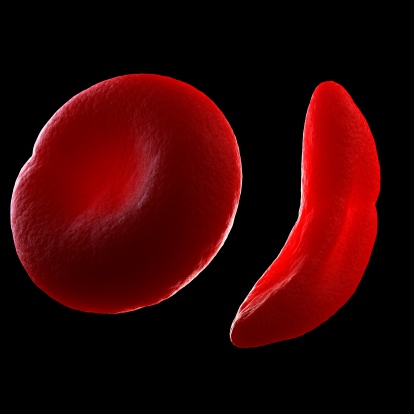
2023 Sickle Cell Society partnership awareness campaign sickle cell omniverse
SHANGHAI, CHINA https://nvidianews.nvidia.com/news/gpu-acceleration-of-top-genomics-application-with-openacc-promises-to-help-speed-delivery-of-life-saving-drugs#:~:text=SHANGHAI%2C%20CHINA%20%2D%2D%20NVIDIA%20today,the%20disease%20treatment%20research%20process. -- NVIDIA today announced that the OpenACC programming standard has enabled Chinese researchers to dramatically accelerate the DNADist genomics application,1 which is used in the early stages of development of treatments for genetic conditions, such as Down syndrome, hemophilia, cystic fibrosis, and sickle-cell disease.
Using the CAPS enterprise OpenACC compiler, Shanghai Jia Tong University researchers accelerated the DNADist application by 16 times on an NVIDIA® Tesla® GPU-based system by adding just four simple hints -- known as "directives" -- to the application code.
DNADist, a distance-matrix application for studying the genetic relationships between various species over evolutionary history, enables researchers to extract information from sequenced DNA data by reading nucleotide sequences, which may potentially lead to a greater understanding of the causes of and treatments for pervasive genetic diseases. Accelerating the DNADist application allows researchers to study a significantly larger range of input data and obtain actionable information earlier in the disease treatment research process.
A programming standard for parallel computing using directives, OpenACC is designed to enable millions of researchers around the world to easily take advantage of the transformative power of GPU computing. It provides the easiest way for users, with or without extensive parallel programming expertise, to accelerate their research in a matter of hours using familiar programming models.
Roche Impressed with OpenACC, Power of GPU Acceleration
By quickly delivering game-changing application acceleration with minimal effort, OpenACC provides world-leading pharmaceutical companies like Roche with the ability to research, identify and develop more effective drugs faster and more cost-effectively.
"I am astonished at how quickly and easily OpenACC unlocked the power of GPU acceleration for DNADist, which is one of our most critical applications," said Steve Pan, project director, Roche Pharma Global Informatics. "The potential impact of GPUs is priceless because getting our products to market faster, even one day earlier, will save more lives."
"Extracting meaningful information from the vast collection of available DNA sequencing data requires ever-increasing amounts of computational power," said Sumit Gupta, senior director of the Tesla business at NVIDIA. "OpenACC enables researchers to quickly and easily leverage the enormous performance of GPU accelerators to analyze mountains of genomics data. This dramatically reduces the time to study biological systems, and potentially leads to the development of more effective next-generation medicines."
A large and growing number of researchers and engineers are using OpenACC-supported compilers and hybrid CPU/GPU computing systems to accelerate all types of applications, including CAD/CAM, image processing, materials science, molecular dynamics, quantum chemistry, and many other applications. In many cases, users are reporting that they have achieved as much as 5-10X or faster levels of acceleration in as little as a few hours of work.
Webinar to Showcase OpenACC, DNADist - Sept. 6, 2012
CAPS enterprise will deliver a free public webinar on Thursday, Sept. 6, 2012, to educate participants about OpenACC use cases and best practices, and provide more detail on the acceleration of the DNADist application. To learn more or to register, visit https://www2.gotomeeting.com/register/668751466.
About NVIDIA Tesla GPUs
NVIDIA Tesla GPUs are massively parallel accelerators based on the NVIDIA CUDA® parallel computing platform and programming model. Tesla GPUs are designed from the ground up for power-efficient, high performance computing, computational science and supercomputing, delivering dramatically higher application acceleration for a range of scientific and commercial applications than a CPU-only approach.
More information about NVIDIA Tesla GPUs is available at the Tesla website. To learn more about CUDA or download the latest version, visit the CUDA website. More NVIDIA news, company and product information, videos, images and other information is available at the NVIDIA newsroom. You can also follow us on Twitter (@NVIDIATesla).
About NVIDIA
NVIDIA (
1) DNADist is part of the Phylip (PHYLogeny Inference Package) open source package of programs used by academicians in the field of biosciences, primarily in phylogeny. Source: http://en.wikipedia.org/wiki/PHYLIP
