Is it possible for engineers and humans to advance intelligence 1) to progress safe affordable homes for families 2) better nutrition for all; 3) better health for all; 4) smarter livelihood education; 5) cultural reust for women as much as men 6) better access of water for all; 7 more efficient and sustainable energy for all; 8 better opportunities for youth to generart? Of course it is but as we look around the world can we help humans everywhere that these intelligent systems are not yet being scaled.?. .
AIworld: Can we data map & celebrate places where education wants youth and tech to design healthy, wealthy and joyful jobs : Taiwan, West Coast USA, India, UK, Singapore/HK, UAE, Korea, Japan, Nordica, Canada France Germany

Probable First 10 priorities of 25X energy efficient supercomputers
  • India Billion peoples basic ai health system & universal finance id
  • Agentic AI transformation womens education 9 to 15
  • Startup open ai ecosystem bridging hundreds of first mile agri and arts/garments etc startups with nations top 10 industries (Elon)
    UK-Valley Alphafold biotech segment leaps include tropical diseases as well as worldwide cancer data
  • Translation of all mother tongues to everyone codes ai via top 2 language llms and decolonial ai geonomic maps
  • Doudna Deepest continent scaled maths problems starting with energy and health transmission
  • First follower humanoid digital twins- eg community safety jobs nobody wants
  • Open profession AI startups
  • Colossus space ai including drone & cable ai
  • Chat+inference+physical ai everywhere self driving cars' "road of things AI"
  • Taiwan AI Digital twin ai factories etc- from Asia to West
  • Earth 2.0 & all deep global data others dont want to first
  • HUmanoids on streets ai
    Japan AI 5 asian supercity benchmark 5 or more western capitals including green model for half of countries with next to no critical minerals
  • Transgeneration Mapping (beyond multilateral relocation of education for millennial generation- eg united mayors ai)
  • HK and diaspora chinese: Digital twin university health colleges
  • Neuroscience etc Mapping start up ecosystem bridging cultures of 10 + regional nations and superport value chains
  • nft and womens metagames ai - eg beingai.org
  • UAE Water ai and Parallel geo-ai system but for middle east primarily desert superports and 360 degree trade maps sustainability
  • France - nuclear datacentre ai micro open ai and top 10 eu continent industries>
  • Sports AI owned by youth- end bad media and bring eg swiss into open euro models
  • Open history- culture ai
  • 25 years of knowledge city ai uniting nordia elearning & human capital- livelihoods new to millennils
  • PLus one
    Help welcomed ongoing intelligence Case Search - source Nvidia top 100 partners in 21st C accelerated computing - alphabet olf engineering inteligence - AI, BioI, Trillion$CoroprateI, DiscoveryI, EnergyI, FinananceI, GovI, HealthI, Icubed : 1) your real 1; 2 your digital 1; 3 your brain body and communal wellbeing support from agentic ai

    Monday, December 31, 1979

    1979 is being used to transfer some all time posts from innovations.ning.com


    ndia and freedom intelligences most collaborative 4 billion brains- caes 1 summiot of year 24-5

    https://www.linkedin.com/pulse/guide-how-ai-changes-every-skill-liv...

    good that india's public servants and tech wizards want ai to be for all next generation brains 

    india has largest number of under 35 brains - for ai to help millennials advance as a generation india or china or both need ai to transform every skill taught or learnt

    india aims by 2050 to bne one of 3 largest gdp economies by ending local poverty everywhere

    so here's a 24-25 india summit- can we work olut one thing eacxh panel wants most help with as well as identofy any other panels needed for the 4 billiion youinger brains on the planet to celebrate good ai

    Summits top guest and hostw: 

    See event 3 Main Guest Speaker: Vinay Kwatra assumed charge as the Ambassador of India to the United States of America on 12 August 2024. Ambassador Kwatra joined the Indian Foreign Service in 1988. In a career spanning over 36 years, Ambassador Kwatra has served in senior roles both in Delhi and across the globe.Aug 12, https://archive.org/details/CSPAN_20250510_032000_Indian_Ambassador...


    Host Mrs & Mr Raj Gupta : Raj was born in Uttar Pradesh and built a 39-year career at the Fortune 500 specialty materials company Rohm and Haas, retiring as Chairman and CEO in 2009. He has served as a director at 15 public companies including Hewlett Packard, DuPont, Tyco, Delphi/Aptiv, and Avantor and at 6 private companies including Vanguard group. He and Kamla Gupta, his wife of 54 years, founded Ujala Foundation with a focus on education and healthcare. Mr. Gupta has degrees from IIT Mumbai, Cornell, and Drexel.

    Kunal Pal is the Executive Director of the Gupta-Klinsky India Institute at Johns Hopkins University. Previously, he spent eight years at the University of Chicago where he led the International Innovation Corps and the Applied Data Fellowship programs as Executive Director

    Displaying agenda in event timezone (4:35 PM EDT)

    Friday, May 9  1:45 pm – 1:55 pm 

    1 Welcome Address · Amita Gupta, Director of Infectious Diseases Division. (Founder and Faculty Co-Chair, Gupta-Klinsky India Institute), Division of Infectious Diseases at the School of Medicine, Johns Hopkins University 1.55 to 5.55 at cspan

    2 Plenary Panel: India-US Relations

    · Sanjeev Joshipura, Executive Director, Indiaspora

    · Arun Singh, Senior Counsellor, The Cohen Group; Former Indian Ambassador to the US

    · Sumona Guha, National Security Expert & Former Senior Director, South Asia, Former USG official

    · Nisha Biswal, Senior Advisor, The Asia Group, Former Deputy CEO, US International Development Finance Corporation

    Growing frontiers of US-India collaborations in the domain of Research, Education, Business and Policy

    3 Opening Keynote Address

    · Vinay Mohan Kwatra, Ambassador of India to the United States of America, Government of India

    India-US: A Defining Partnership for the 21st Century

    4 Panel Discussion: Geopolitics· Tanvi Madan, Research Fellow, Brookings Institution

    · Lisa Curtis, Senior Fellow, Director, Indo-Pacific Security Program at the Center for a New American Security (CNAS)

    · Sadanand Dhume, Senior Fellow, American Enterprise Institute

    Geopolitics in Flux: India’s Expanding Role on the World Stage

    3:30 pm – 4:10 pm

    Panel: Innovation – India-US Bilateral TRUST

    Mainstage (Theatre)

    · Kriti Upadhyaya, Founder, IndUS Tech Council, C2C Advanced Systems

    · Joshua White, Professor of the Practice, International Affairs at Johns Hopkins SAIS

    · Dhruva Jaishankar, Executive Director, ORF America

    Challenges & Opportunities for India-US TRUST (Transforming Relationship Utilising Strategic Technology) Initiative"

    5 4:10 pm – 4:30 pm Plenary Keynote: Development Alternatives

    · Yogendra Yadav, President, Swaraj India- What kind of India do we seek?

    6 Panel: Inclusive Economic Development 

    · Rina Agarwala, Professor of Sociology, Johns Hopkins University

    · Reema Nanavaty, Director, Self Employed Women's Association (SEWA)

    · Cathy Feingold, AFL-CIO International Director and Deputy President, International Trade Union Confederation

    · Vijayendra Rao, Lead Economist, Development Research Group, World Bank

    Building Development Alternatives: An Economy of Nurturance

    7 5:30 pm – 6:00 pm SEWA Guided Tour Hum Sab Ek is an immersive multimedia exhibit guided by Dr. Satchit Balsari examining the impact of the pandemic on the lives of women workers in India’s informal economy and SEWA’s response to it, groun...

    Read More

    8 Roundtable: Global Food Systems & Policy

    ECONOMIC DEVELOPMENT TRACK

    940/944

    · Mia Blakstad, Window Manager, Food & Nutrition, World Bank

    · Yan Bai, Economist, The World Bank

    · James Thurlow, Director, Foresight and Policy Modeling, International Food Policy Research Institute (IFPRI)

    · Noora-Lisa Aberman, Research Lead, Gender Unit, The Global Alliance for Improved Nutrition (GAIN)

    · Neha Kumar, Senior Research Fellow, International Food Policy Research Institute

    6:00 pm – 6:45 pm

    Panel: Non-Communicable Diseases

    NEW CHALLENGES IN HEALTHCARE - NON COMMUNICABLE DISEASES TRACK (CANCER)

    820

    · Alka Dwivedi, Postdoctoral Research Fellow, National Cancer Institute, Bethesda, Maryland

    · Surendranath S. Shastri, MD, Anderson Cancer Center

    · Kala Visvanathan, Professor in Epidemiology and Oncology, Johns Hopkins University

    · Sanjay Shete, Betty B. Marcus Chair in Cancer Prevention, Professor of Biostatistics and Epidemiology, Deputy Division Head, Cancer Prevention and Population Sciences, Univesity of Texas

    · Nilanjan Chatterjee, Professor of Biostatistics and Genetic Epidemiology, Johns Hopkins University

    India's Cancer Challenge: Scaling Prevention, Screening and Treatment

    6:45 pm – 7:30 pm

    Panel: Climate x Health

    ECONOMIC DEVELOPMENT TRACK

    940/944

    · Katherine Hadda, Senior Visiting Fellow, CSIS

    · Gigi Gronvall, Senior Scholar, Johns Hopkins Center for Health Security and a Professor in the Department of Environmental Health and Engineering

    · Aishwarya Nagar, Senior Analyst, Johns Hopkins Center for Health Security

    Policy Actions for India-US Collaborations on Climate and Health

    6:45 pm – 7:30 pm

    Panel: Health Systems

    NEW CHALLENGES IN HEALTHCARE - NON COMMUNICABLE DISEASES TRACK (GENERAL)

    820

    · Rajani Ved, Director of Health, Gates Foundation

    · Sara Bennett, Professor and Vice Chair, Department of International Health; GKII Faculty Co-Chair, Johns Hopkins Bloomberg School of Public Health

    · Somesh Kumar, Senior Director, New Initiatives and Innovations, JHPIEGO

    · Krishna Rao, Associate Professor, Bloomberg School of Public Health

    Raising the Bar in Primary Health Care: India’s Journey and Unfinished Business

    7:30 pm – 8:30 pm

    Hum Sab Ek (We Are One) Exhibit: SEWA’s response to the pandemic (Curatorial tour)

    WOMEN AT THE CENTRE

    820

    Hum Sab Ek is an immersive multimedia exhibit guided by Dr. Satchit Balsari examining the impact of the pandemic on the lives of women workers in India’s informal economy and SEWA’s response to it, groun...

    Read More

    Saturday, May 10

    8:00 am – 9:00 am

    Registration and Networking

    9:00 am – 9:10 am

    Welcome Address

    Mainstage (Theatre)

    · Sara Bennett, Professor and Vice Chair, Department of International Health; GKII Faculty Co-Chair, Johns Hopkins Bloomberg School of Public Health

    9:10 am – 9:45 am

    Fireside Chat: Economy

    Mainstage (Theatre)

    · V. Anantha Nageswaran, Chief Economic Advisor of India, Government of India

    · Pravin Krishna, Johns Hopkins U

    India’s Journey to becoming a $30 Trillion Economy

    9:45 am – 10:00 am

    Plenary Keynote

    Mainstage (Theatre)

    · Smriti Irani, Former Minister of Education and Women & Children, Government of India

    Women Shaping India's Future: A Blueprint of Inclusive Economic Development

    10:00 am – 10:45 am

    Plenary Panel

    Mainstage (Theatre)

    · Ashwin Bharath, CEO, Galent, Co-Founder & CEO of Revature

    · Sridevi Sarma, Vice Dean, Whiting School of Engineering

    · Ritu Agarwal, Wm Polk Carey Distinguished Professor, Carey Business School

    · Shibu Vijayan, Chief Medical Officer , Qure

    How is India preparing an AI ready workforce?

    10:45 am – 11:30 am

    Panel: Higher Education

    Mainstage (Theatre)

    · Leah Mason, Deputy Director of Research, Evaluation and Learning, Institute of International Education

    · Hanan Saab, Associate Vice President of Government Relations and Public Policy, Association of American Universities

    · Sunil Kumar, President, Tufts University

    · Rajika Bhandari, Co-Founder, SouthAsia-IEN (South Asia International Education Network)

    · Shuchita Sonalika, Director and Head–North America, Confederation of India Industry (CII)

    Internationalization of Higher Education: India-US Collaborations for Global Competitiveness

    11:30 am – 12:00 pm

    Short Break; SEWA Guided Tour

    Hum Sab Ek is an immersive multimedia exhibit guided by Dr. Satchit Balsari examining the impact of the pandemic on the lives of women workers in India’s informal economy and SEWA’s response to it, groun...

    Read More

    12:00 pm – 12:45 pm

    Panel: Tuberculosis

    NEW CHALLENGES IN HEALTHCARE - INFECTIOUS DISEASES TRACK (TUBERCULOSIS)

    820

    · Soumya Swaminathan, Chief Scientist, Indian Council of Medical Research (ICMR) & World Health Organization (WHO)

    · Richard Chaisson, Professor of Medicine, Epidemiology and International Health, Johns Hopkins University

    · Amita Gupta, Director of Infectious Diseases Division. (Founder and Faculty Co-Chair, Gupta-Klinsky India Institute), Division of Infectious Diseases at the School of Medicine, Johns Hopkins University

    India’s Role in Eliminating Tuberculosis Globally by 2030

    12:00 pm – 12:45 pm

    Panel: Palliative Care

    NEW CHALLENGES IN HEALTHCARE - PALLIATIVE CARE TRACK

    940/944

    · Uma M, Additional Chief Secretary & Development Commissioner, Government of Karnataka, India

    · M R Rajagopal, Chairman Emeritus, Pallium India Adjunct Professor of Global Oncology, Queen's University, Canada

    · Avani Prabhakar, Assistant Professor of Medicine, Johns Hopkins School of Medicine

    · Carolin Elizabeth George, Head, Department of Community Health, Palliative care & Research, Bangalore Baptist Hospital

    · Bhavna Seth, Assistant Professor of Medicine; Director Global Health, Dorothy P. and Richard P. Simmons Center for Interstitial Lung Disease Division of Pulmonary, Allergy, Sleep, and Critical Care Medicine University of Pittsburgh Medical Center

    · Sweety Thomas, Chief of Staff, Ajit Isaac Foundation

    The Changing Reality of Palliative Care in India: From Margins to Mainstream Healthcare

    12:45 pm – 1:30 pm

    Panel: Reimagining Global HIV Leadership

    NEW CHALLENGES IN HEALTHCARE - INFECTIOUS DISEASES TRACK (HIV)

    820

    · Sunil Solomon, Vice Chair for Research, Department of Medicine; Director, Centre for Infectious Diseases India, Johns Hopkins School of Medicine

    · Chris Beyrer, Professor of Medicine & Director, Duke Global Health Institute

    · Monica Gandhi, Professor of Medicine, University of California, San Francisco

    · Shruti Mehta, Dr. Charles Armstrong Chair & Bloomberg Centennial Professor in Epidemiology, Johns Hopkins Bloomberg School of Public Health

    · Moupali Das, Vice President, Clinical Development, HIV Prevention and Virology Pediatrics Head, HIV Prevention, Gilead Sciences

    Navigating the changing landscape of funds and India’s Emerging Role

    12:45 pm – 1:30 pm

    Panel: Non-Communicable Diseases

    NEW CHALLENGES IN HEALTHCARE - NON COMMUNICABLE DISEASES TRACK (GENERAL)

    940/944

    · Tara Thiagarajan, Founder & Chief Scientist, Sapien Labs

    · Prabir Roy-Chaudhury, Professor of Medicine; President, American Society of Nephrology; Co-Director,, University of North Carolina (UNC) Kidney Center

    · Lawrence Appel, Professor, Johns Hopkins University Schools of Medicine and Bloomberg School of Public Health

    · Chirag Parikh, Director, Division of Nephrology, Johns Hopkins University School of Medicine

    · Uttara Bharath Kumar, Associate, Department of Health, Behavior and Society, Johns Hopkins Bloomberg School of Public Health

    · Dinesh Nair, Sr . Health Specialist, World Bank

    The New Pandemic in India

    1:30 pm – 2:30 pm

    Panel: Innovations in Digital Health

    TECH INNOVATIONS ENHANCING GROWTH & DEVELOPMENT TRACK

    820

    · Marelize Gorgens, Lead, Digital and AI for Human Capital, The World Bank

    · Smisha Agarwal, Director, Center for Global Digital Health Innovation, JHBSPH

    · Rama Chellappa, Bloomberg Distinguished Professor and Interim Co-Director, Johns Hopkins Data Science and AI Institute

    · Shibu Vijayan, Chief Medical Officer , Qure

    Harnessing Digital Tools & Infrastructure for Improved Health Outcomes

    1:30 pm – 2:30 pm

    Panel: MedTech

    TECH INNOVATIONS ENHANCING GROWTH & DEVELOPMENT TRACK

    940/944

    · Anand Kapai, Vice President, Global Marketing, Siemens Healthineers

    · Kunal Parikh, Assistant Professor, Johns Hopkins School of Medicine

    · Jordan Shuff, Research Engineer, Johns Hopkins University

    · Damini Agarwal, Chief Technology Officer, Infinite Biomedical Technologies LLC

    · Youseph Yazdi, Johns Hopkins Center for Bioengineering Innovation & Design (CBID)

    Innovation and Health Technology Interventions in India

    2:30 pm – 3:00 pm

    SEWA Guided Tour

    Hum Sab Ek is an immersive multimedia exhibit guided by Dr. Satchit Balsari examining the impact of the pandemic on the lives of women workers in India’s informal economy and SEWA’s response to it, groun...

    Read More

    2:30 pm – 3:30 pm

    Short Break

    3:30 pm – 4:15 pm

    Panel: Women Leaders in STEMM

    WOMEN AT THE CENTRE

    Mainstage (Theatre)

    · Anita Shet, Professor, Johns Hopkins Bloomberg School of Public Health

    · Kanta Singh, Deputy Representative, UN Women India

    · Shereen Bhan, Leadership Development Director, WomenLift Health

    · Kalpana Kanthan, Chief Development Officer, American India Foundation

    · Manuela Villar Uribe, Senior Health Specialist of the Health Nutrition and Population Global Practice, World Bank

    From Pipeline to Powerhouse: Catalyzing Women’s Leadership in STEMM

    4:15 pm – 4:35 pm

    Closing Remarks & Vote of Thanks

    Mainstage (Theatre)

    · Raj Gupta, Co-Chair, Gupta-Klinksy India Institute at JHU

    · Alex Triantis, Dean, Johns Hopkins Carey Business School

    4:35 pm – 5:00 pm

    Cultural Performance

    WOMEN AT THE CENTRE

    Mainstage (Theatre)

    JHU SHAKTI

    Shakti is the competitive Indian Classical Dance team at Johns Hopkins University. Since 2003, the dancers of JHU Shakti have excelled on stage, telling stories through dance while holding dear the value of classical Indian dance form and culture. Marking a powe...

    Read More

    Views: 12

     Reply to This

    Replies to This Discussion

    3 how to help india ambassador to dc - message designing systems to double dgp by 2030 supporting Trump adminsitration needs (American greatness) with all of India;s brainpower

    8 Economic track Global Food Systems

    About

    Bio
    Dr. Yan Bai leads the global monitoring of the cost and affordability of healthy diets indicators at the Development Data Group of the World Bank. He obtained his Ph.D. in Food and Nutrition Policy from Tufts University’s Friedman School of Nutrition and a master’s degree in international business and finance from Tufts University’s Fletcher School. His research combines economic and scientific methods to focus on data-driven analysis of food and nutrition security worldwide, with work published in esteemed journals such as Nature Food, Lancet Planetary Health, and Food Policy. Before pursuing his graduate education, he gained valuable industry experience as an investment analyst at global financial institutions, focusing on health and agriculture sectors. Dr. Bai holds dual bachelor’s degrees in economics and chemistry from Peking University.

    Affiliations
    The World Bank
    Economist
    World Bank
    Consultant
    Social account linkedinLinkedin

    Noora-Lisa Aberman IFPRI

    Research Lead, Gender Unit The Global Alliance for Improved Nutrition (GAIN) Washington, District of Columbia, United States

    May 9, 2025, 6:00 PM - 6:45 PM (America/New_York)
    About

    Bio
    Noora is GAIN’s Research Lead for Food Systems Governance and Inclusion and leads GAIN’s Gender Unit, which ensures GAIN programs and projects substantively integrate gender responsive and equitable activities and outcomes. Previously, Noora was an Associate Research Fellow at the International Food Policy Research Institute, where she undertook research on gender, agriculture, and food and nutrition security throughout Africa and Asia for 15 years. She holds a PhD in Agricultural Economics from Hohenheim University.
    Additional Affiliations  International Food Policy Research Institute (IFPRI) 2017-20
    International Food Policy Research Institute (IFPRI) previously Malawi Country Program Manager 13-17
    Program Analyst 11-13
    Education
    University of Hohenheim 
    Doctor of Philosophy - PhD ,
    Agriculture and Natural Resource Economics, Centre for Social & Institutional Change in Agriculture
    ,2013-17
    American University School of International Service
    MA International Economic Policy ,
    2003-2006
    Social account linkedin

    Sunday, December 30, 1979


    https://archive.org/details/CSPAN3_20250501_204000_Discussion_on_Korean-Japanese_Relations_Under_Trump_Admin./start/906/end/966?q=china

    Saturday, December 29, 1979

    china-us update spring 2025

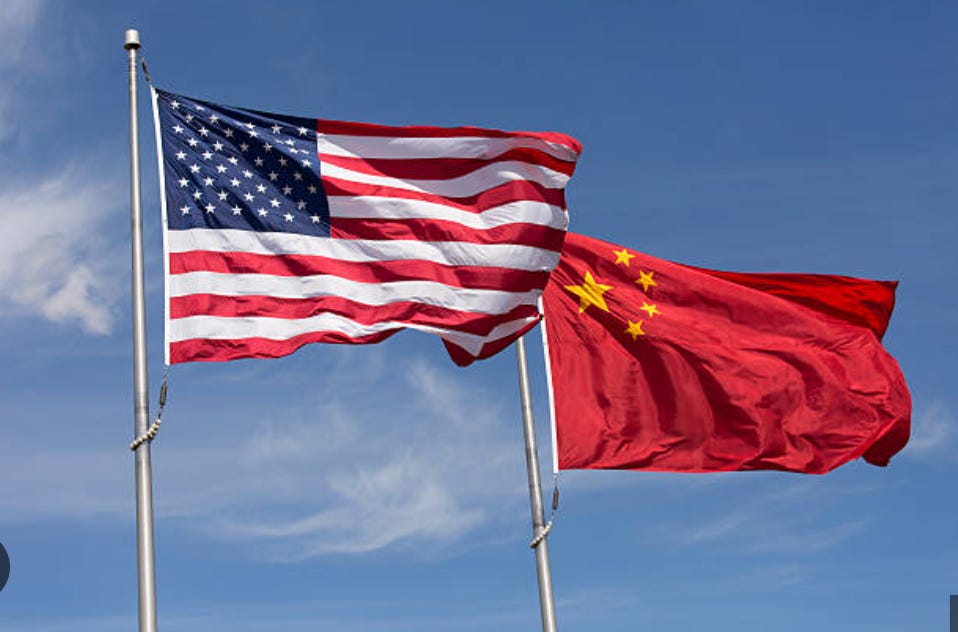
     The first trade talk between China and the U.S. in the second Trump administration apparently went surprisingly well in Geneva on the weekend, according to both sides on Sunday May 11.

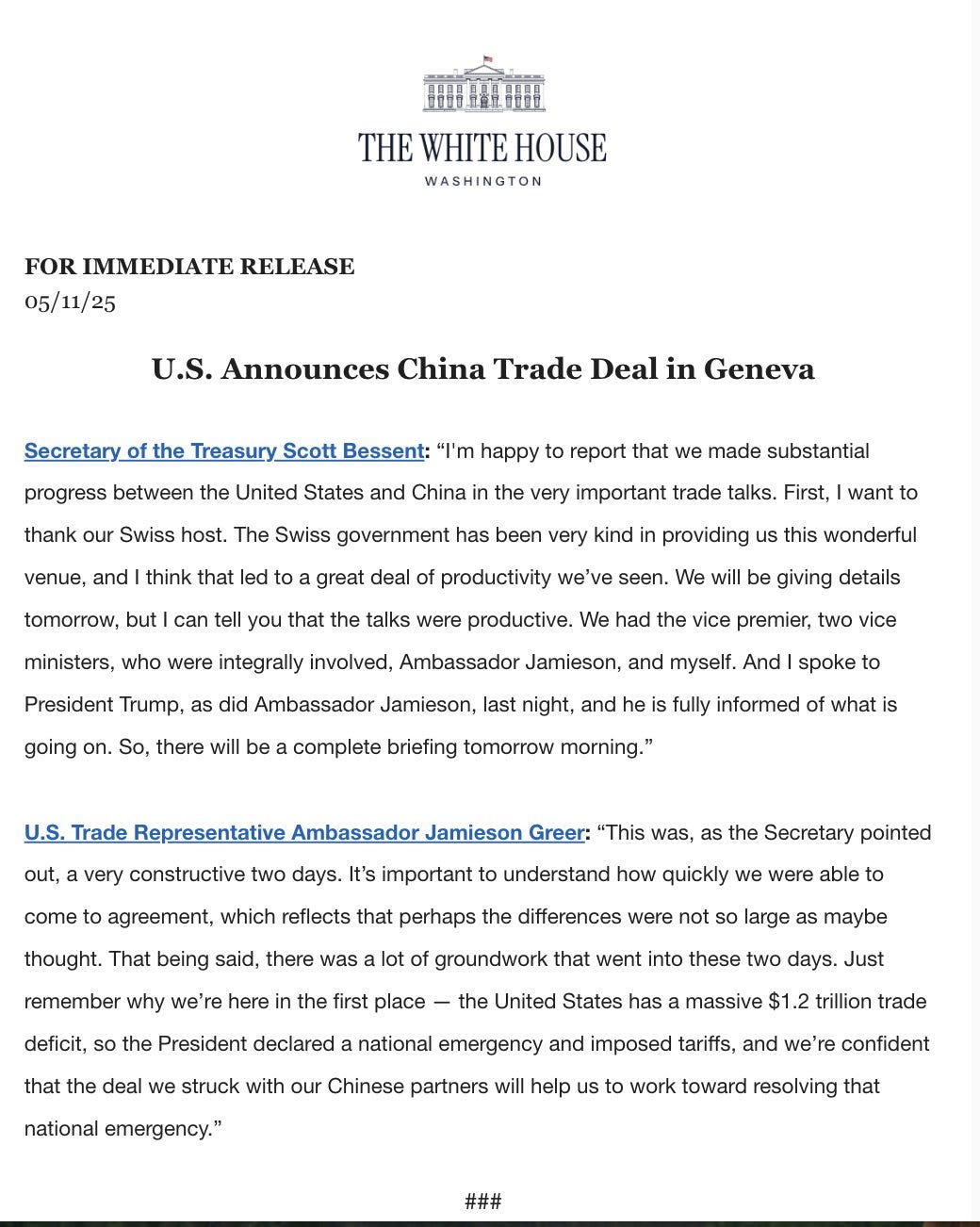
    The White House released a statement declaring a “trade deal


    Here is the footage of Secretary of the Treasury Scott Bessent and U.S. Trade Representative Ambassador Jamieson Greer making the remarks.

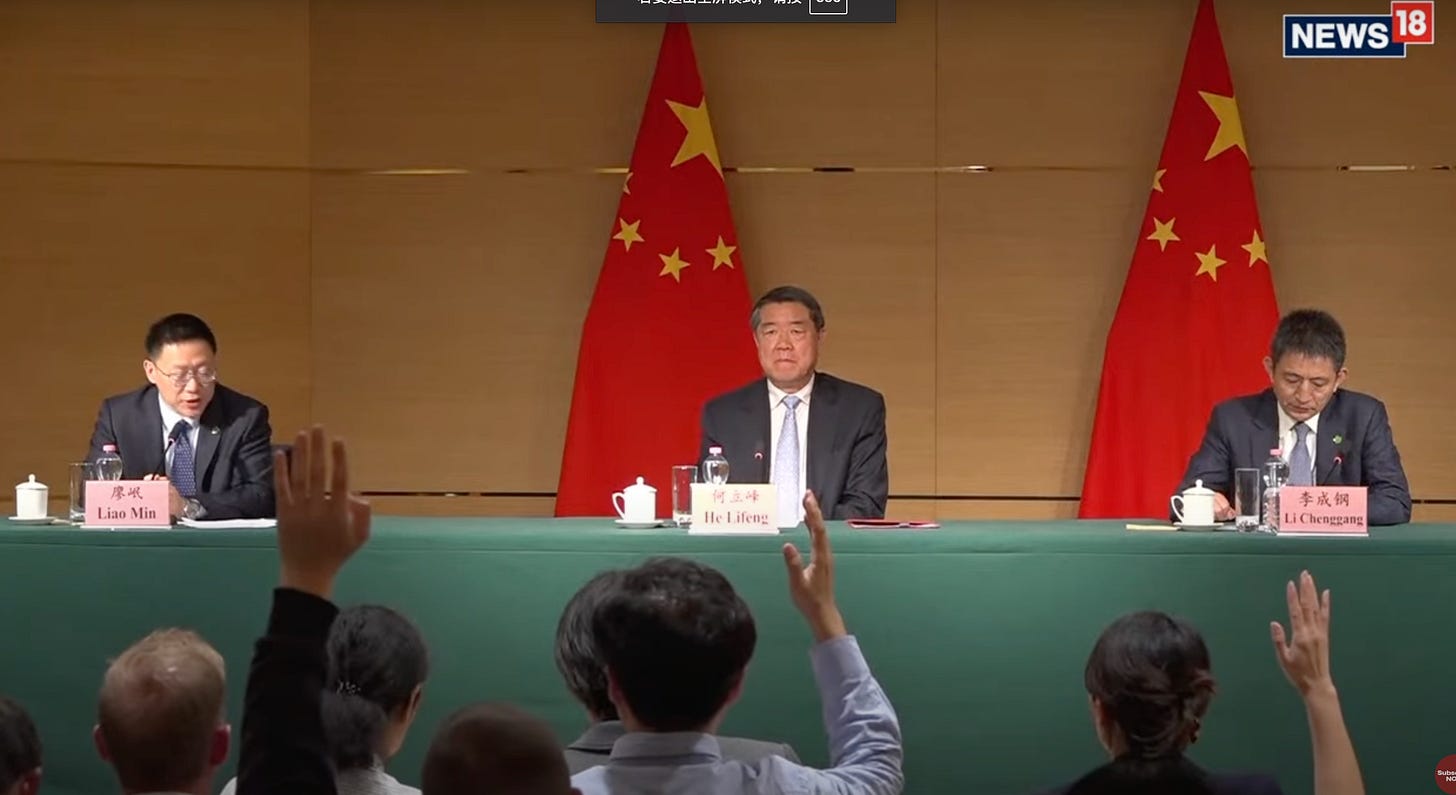
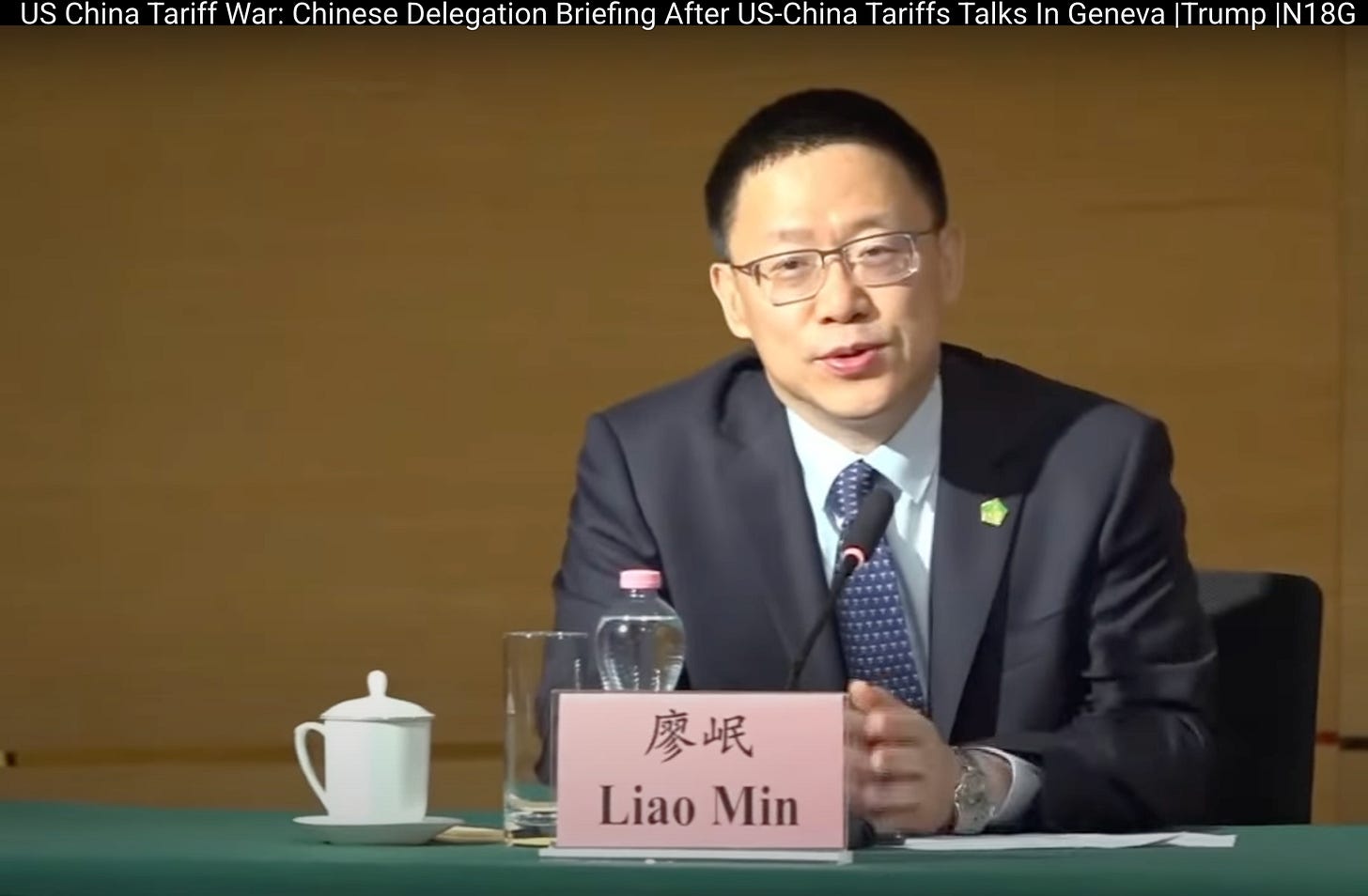
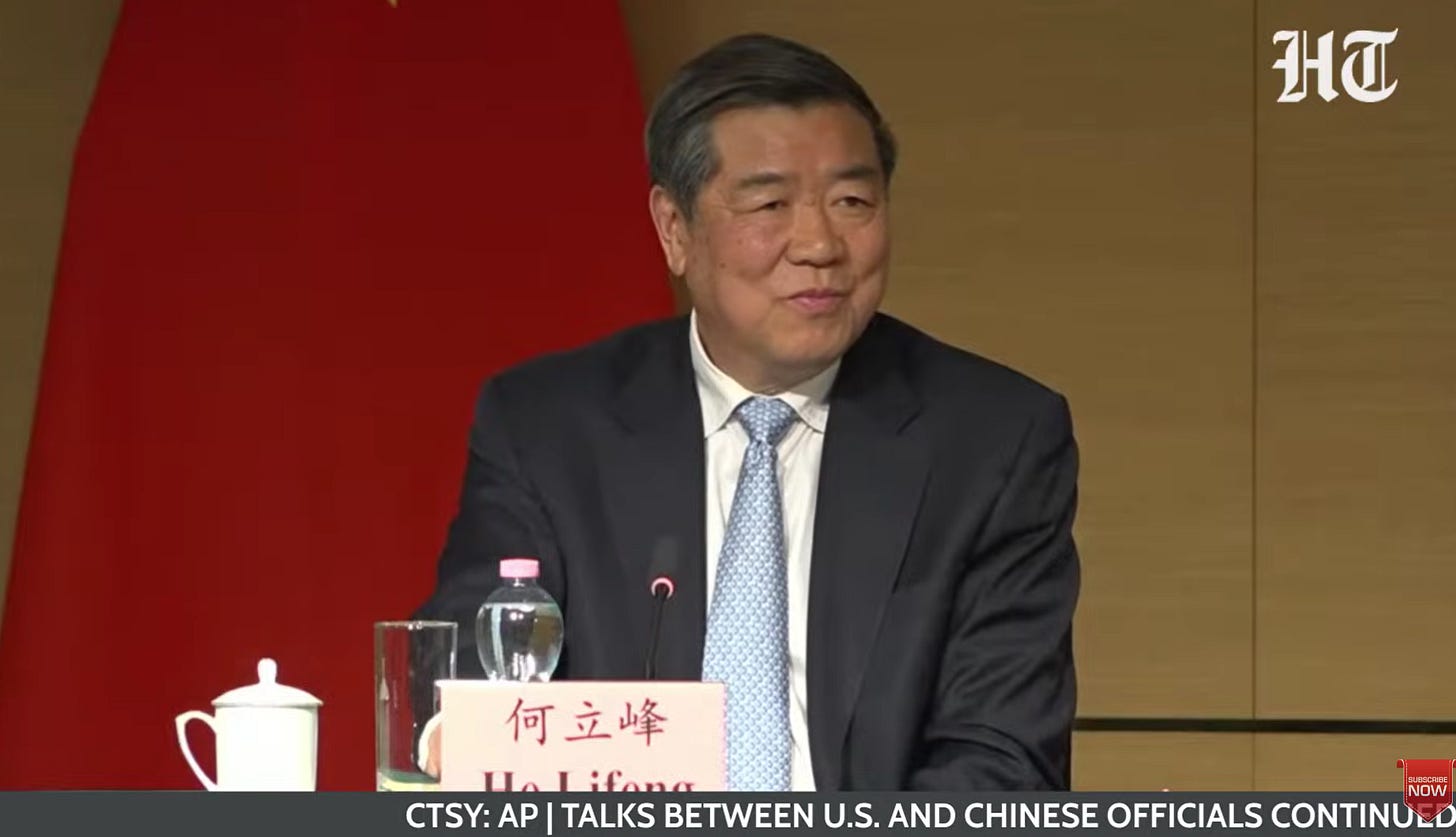
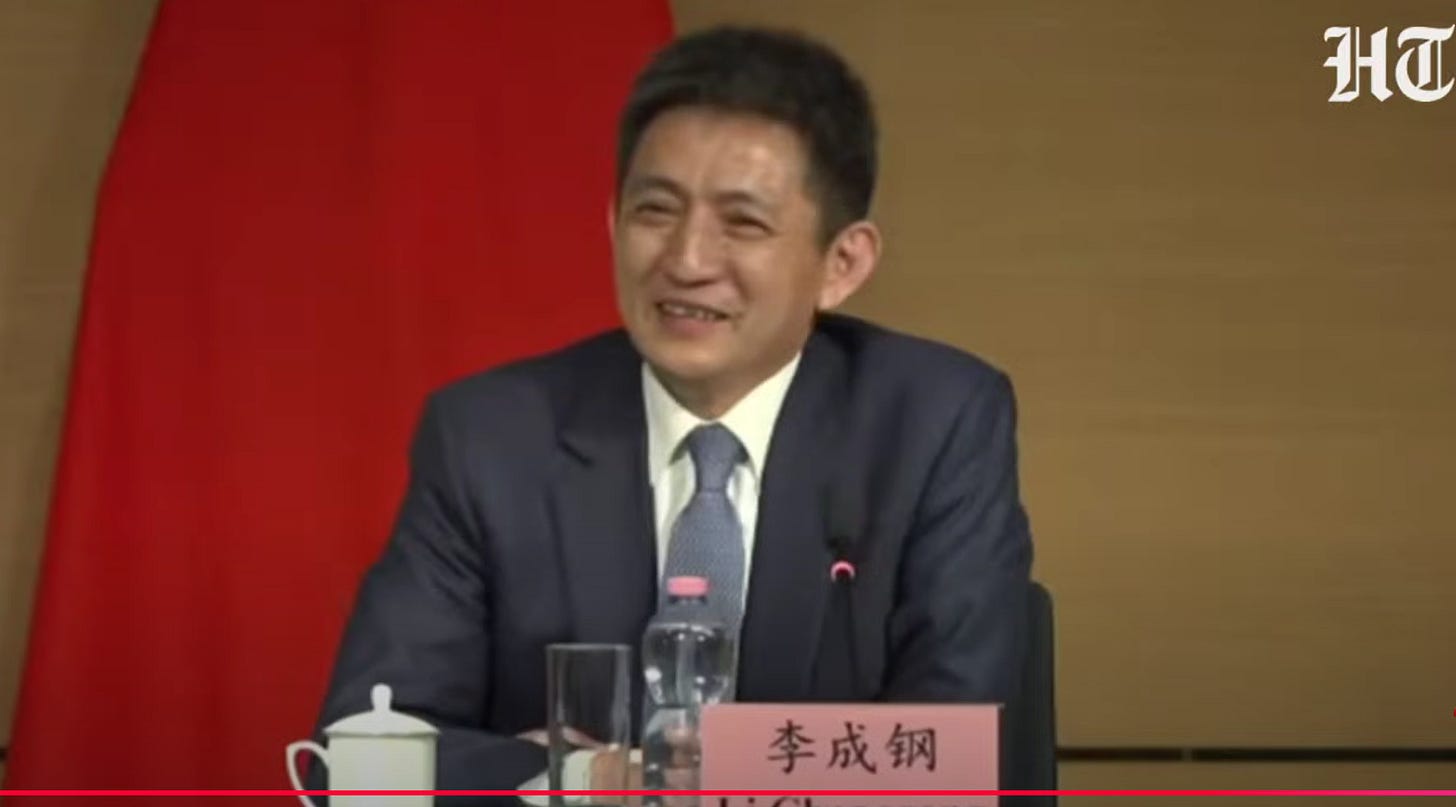
    On the Chinese side, Vice Premier He Lifeng, Li Chenggang, Vice Commerce Minister and International Trade Representative, and Liao Min, Vice Minister of Finance, met the press in Geneva.

    A few thoughts:

    1. Against the de-facto trade embargo now in place as a result of steep tariffs, lack of direct communications, and oftentimes defiant rhetoric, the negotiation apparently went surprisingly well, at least according to the both sides at the table. Yes, they agreed to details that are not yet public and also establish a “consultation mechanism” which is just more talks.

      But that’s always the first step and it hasn’t exactly been helpful to have the embarrassment of White Hosue saying “we are talking” and then the Foreign Ministry in Beijing saying “we are not.”

    2. The details are still lacking today and the two sides, according to China, agreed to only release them tomorrow (May 12). My pure speculation is there will be some sort of announcement of Chinese purchase of U.S. products.

      That is because Greer, the USTR, said he is “confident that the deal we struck with our Chinese partners will help us to work toward resolving that national emergency” of huge trade deficits. As you will read below, a state-run Xinhua News Agency reporter raised a question about that. Li Chenggang, China’s Vice Commerce Minister and International Trade Representative, said “any possible deal to be reached, will definitely be in the interest or in the development interest of China's own.” That is effectively a “yes,” and my reading of his explanation is basically “it will be what China needs anyways.” Plus, bulk buying is among the lowest-hanging fruits out there and gives something concrete that President Donald Trump can brag about.

    3. It feels strange to hear both sides praising the other side for being professional and the working atmosphere being pretty good - almost as if they liked one another! That’s likely not the impression you get from listening to domestic voices in the U.S. and China.

    Below is the transcript of the Chinese side’s press conference


    Liao Min, Vice Minister of Finance:


    Ladies and gentlemen, good evening. Welcome to today's press conference. I'm your moderator, Vice Minister of Finance of China, Liao Min. On the 10th and 11th of May, the Chinese Lead Person on Trade and Economic Affairs and Vice Premier of the Chinese State Council, He Lifeng, and the US lead person, US Treasury Secretary Scott Bessent, held a high-level meeting on China-US trade and economic issues. Today, we are hosting this press conference and His Excellency, Vice Premier of the State Council, He Lifeng will brief you on that meeting as well as China's positions on relevant issues. Attending today's press conference are also the China International Trade Representative and Vice Minister of Commerce, Mr. Li Chengang. He is going to take your questions later on. First of all, I would like to invite Vice Premier He Lifeng to make an introduction.

    He Lifeng, Vice Premier


    Friends from the press, good evening. On the 10th and 11th of May, as the Chinese Lead Person on China-US Trade and Economic Affairs, I held a high-level meeting with the US lead persons. US Treasury Secretary Scott Bessent and USTR Ambassador Jamieson Greer. The two sides held in-depth exchanges on trade and economic issues of their respective concern. The atmosphere of the meeting was candid, in-depth, and constructive. The meeting achieved substantial progress and reached important consensus.

    The two sides agreed on establishing a consultation mechanism for trade and economic issues, identify the lead persons on each side and we'll carry on further consultations relating to trade and economic issues of their respective concerns. The two sides will finalize relevant details as soon as possible and will issue a joint statement that was reached at the meeting on May 12th.

    I would like to take this opportunity to give our special thanks to the Swiss government, who is our host this time, for their enormous support and warm hospitality. At the same time, our American colleagues’ professionalism and diligence was also impressive.

    Over the past three months or so. The global trade war, which was provoked or initiated by the United States, has caught global attention. China's position towards this trade war has been clear and consistent. That is China doesn't want to fight a trade war because trade wars produce no winners. But if the US insists on forcing this war upon us, China will not be afraid of it and will fight to the end.

    Under the current circumstances, this meeting has caught high attention from the international community. And thanks to the concerted efforts from both sides, the meeting has been productive and has been an important first step taken by the two sides to properly resolve their differences through equal-footed dialogue, and also for bridging differences and deepening cooperation. This meeting has laid the foundation and created the conditions for that effort.

    Today’s world is undergoing changes unseen in a century. China-U.S. trade and economic relations are not only of great importance to China and the United States but also have a major impact on the global economic stability and development. The nature of the China-US economic and trade relations is mutually beneficial and win-win. The key is to follow the principle of mutual respect, peaceful coexistence and win-win cooperation, and find ways to properly resolve issues through equal-footed dialogue and consultation in order to foster a stable, sound, and sustainable China-US trade and economic relationship.

    We are ready to work together with the US side to actively implement the important consensus reached by our heads of state on the 17th of January in their phone call. And with a pragmatic approach to problem solving, we'll be happy to engage in candidate dialogue and equal-footed consultation, manage our differences, tap into the potential for cooperation, expand the list of collaborative outcomes, and make the pie of mutual benefits bigger. We're gonna promote new development in the China-US trade and economic relations and inject more certainty and stability into the world economy. Thank you.

    Liao Min:

    Thank you, Vice Premier He Lifeng.

    Xinhua News Agency reporter:

    Vice Premier He Lifeng, I'm with the Xinhua News Agency. The US White House has released information saying that the potential deal between the US and China will help address the $1.2 trillion trade deficit. What's China's comment on this?

    He Lifeng:

    As regards the outcomes of the meeting between China and the United States, it will be reflected in tomorrow's joint statement. For the specifics that you're asking for, I would like to ask Mr. Li Chengang to answer your question.

    Li Chenggang, Vice Minister of Commerce and International Trade Representative


    Thank you, friends from the press. China has always [been] pursuing win win outcomes in its trade and economic negotiations. So, and therefore, any possible deal to be reached, will definitely be in the interest or in the development interest of China's own. Thank you.

    CGTN reporter:

    I'd like to ask China's view on the atmosphere of this meeting.

    Li Chenggang:

    Just as Vice Premier He has commented over the last couple of days, the economic and trade teams of China and the United States held candid, in-depth, and constructive dialogue and reached important consensus.

    And I reckon that this meeting has reflected the following three characteristics.

    One is mutual respect. Guided by the consensus of the two heads of state, the two sides proceeded from the general picture of China US trade and economic relations, carefully listen to each other's concerns and take in full consideration of each other's national realities as well as differences in development stage and systems, the two sides have showed sincerity and promoted substantial progress in the meeting.

    Second is equality and mutual benefit. In the meeting, the two sides accommodated each other's concerns and development interests. The two sides upheld the rational objective and pragmatic spirit, moved towards each other and actively sought for the largest common denominator in their cooperation, accumulating conditions for the sound, stable, and sustainable development of China-US economic and trade relations.

    Third is professionalism and high efficiency. The economic and trade teams from both sides have upheld a professional spirit and tapped into their respective expertise, and use the limited time of the last couple of days to have intensive consultations. They had candid and in-depth exchange of discussions on relevant issues in the trade and economic sphere, creating a solid foundation for the consensus that was to be reached in this meeting. Thank you.

    Liao Min:

    We'll continue to raise questions, but in the interest of time, this will be the last question.

    Hugo Miller, Bloomberg News

    Thank you for taking my question. Very simply, can you tell us anything more about what this negotiation mechanism is and anything more you are, - I understand - issuing in a joint statement tomorrow. Can you say anything more about when that will be tomorrow, before the markets open, for example? Hugo Miller with Bloomberg News.

    Li Chenggang:

    Thank you for your questions. As regards the mechanism, actually, Vice Premier He also touched upon it just now. At this meeting, the two sides agreed to establish a consultation mechanism on trade and economic issues. As far as the Chinese side is concerned, Vice Premier He Lifeng is going to be the lead person for China-US trade and economic affairs. And he's going to co-lead the. mechanism together with the U.S. lead person.

    Led by the lead persons on both sides, the working teams from both sides are going to have regular and irregular communications relating to trade and economic issues. The timing as well as the venue or location for future communications will be determined by both sides. And with the facility of modern telecommunication technologies, we have lots of options, including teleconferencing and making phone calls.

    As regards the second part of your question, based on the understanding reached between China and the United States, we are not in a position today to release more of the substance of what we agreed on. As regards the timing for the release of the joint statement, as we say back in China, 好饭不怕晚 if the dishes are delicious, then timing is not a matter. So I think no matter when this statement is released, it's going to be good news for the world.

    Liao Min:

    Thank you very much. I'd like to thank Vice Premier He Lifeng for his time. The time for the press conference is rather short, but it's very informative. And thank you again for your attention. We are going to keep you updated about follow-up information and hope you could keep covering the developments.

    Share

    CHINA APPEARS READY FOR TRADE TALKS WITH U.S.

    ·
    APR 30
    CHINA APPEARS READY FOR TRADE TALKS WITH U.S.

    Princeton, New Jersey (Pekingnology) — Messages published on Wednesday, April 30 (ET) by two well-known social media accounts in China, with established links to the Chinese government, appear to show Beijing is now ready to talk with Washington on the tariffs at the latter’s request.

    CCG Update - Center for China and Globalization
    Remembering Joseph S. Nye Jr.
    Joseph S. Nye Jr., an influential figure in international relations who shaped decades of American foreign policy and introduced the world to the enduring concept of “soft power,” died on Tuesday in Cambridge, Massachusetts, at the age of 88. A former dean of Harvard’s Kennedy School and senior official in the U.S. government, Nye’s passing marks a prof…
    Read more
    Pekingnology

    Recommend Pekingnology to your readers

    Views: 3

     Reply to This

    Saturday, December 25, 1976

    entrepreneurial curriculum

    although my father norman macrae had first coined the term entrepreneurial revolution in his 1960 economist series on loving each other's countries - which had begun with celebrating in 1962 how japan was on a mission to help all asians two third of humanity rise, the series of surveys on entrepreneurial revolution began in the economist dc 25 1976 as you can see at www.entrepreneurialrevolution.city

    it had been preceded by dads first future history 1972's next 40 years which had argued that fintech would need to leap over big politicians/banking's paper currency

    er added idea that every legislature an professional needed to transform to valuing sme startup networks - the race to save our species would need to end all the biggest least sustainable corporations and governments - the mischief that the east indies company had amplified from 1760 with birth of age of machines and humans needed transparent recnilia if all livesmatter.city

    selected update 2020

    dear sam pitroda- are your family well and hubbing out of chicago?-  -amitav at american university, unesco, schwarzman remembers when your nearly free phones in india helped his family stay in touch - unni is in vienna connecting eg ban-ki moon and other agenda with goals of family owned companies like tata- sam you I met for 2 days at windsor castle retreat on future of health in 2015- i dont always know how whatsapp works- so resending my survey question- what can be zoomed at unga 2020 to help people in india or wherever un linksin- by the way when unga2019 was real i attended an event celebrating ghana's new university founded by a tech wizard-soros is connecting 30 colleges including ghana's and my favorite brac university of www.fazleabed.com whom i visited 10 times in dhaka before his death- ghana unga event was hosted out of facebooks new york office but the unit of facebook was based in chicago- some dots to connect? POSSIBLE DUPLICATION SURVEY what is most human zoom we can stage 2020 for india and un- i ask because 75 years ago while un was being born at san francisco opera house- grandad sir kenneth kemp was writing up legalese of india's independence after 25 years with gandhi as mumbai's 2 most trained barristers of global and national affairs- last year bloomberg's unga summit focused on modi's ideas of future - this year bloomberg cancelled his summits but many surveys on who will zoom what sept 15-30 are happening- if you know anyone concerned with what is future of india or un who might linkin zoom etc please say   -tours   

    Wednesday, May 30, 1973

    .
    ..Can humans design a world in which each next girl born has a good chnace to thrive?Clearly this question was not the purpose of the white men from Europe who from late 1490s set out to acquire places -in new world America via old world Africa and Asia...Scot Adam Smiyh can be read as both the last person to ask this question in would before engines (moral sentiments 1758) and first 16 yeras of engines (advantage of nations 1776) . (Adam's first disappointment was that Scotlan's land of engineer was unable to join in an united states of english speaking freedom- instead america decalred indepndenc leaving Scots ruled by London. iN 1843, Lomdon Scot James Wilson founded The Economist to renew Smith's question - could queen victoria start desiging empire of commonwealth instead of one starving the Irish, stuntiing the peoples of India etc/.The centenary autobiography of The Economist in 1943 recognises that root cause of world war was the then G* most powerful nations had not been addressing this question: when the war ended in 1945 the UN was foinded to have another go at asking this question as well as to reboot advanced economies.It can be argued that about 75 years later, digital UN2 as advanced by Guterres (with quest for digital cooperation beginning 3 months before his 10 year appointment when educatirs reviewing the first year of sdg4 saw a system with no hope of most youth's inclusion- humans didnt not just need goals but transformation of systems connecting every community) Apps that share life critical knowhow multiply value in use unlike consuming up things. It beggars belief that essentially the same 8 empires that misapplied machines 1760-1939 have brought the world to the verge of extinction again by not valuing digital cooperation/learning economics even though we have had satellite coms since 1964 and von neumann 1951 briefed economist journalists on the world's most valuable question what (above zero-sum) good will peoples do with 100 times more tech every decade 1930s to 2020s....You don't even need hi-tech to see how a billion asian women ended rural poverty 1972-1996. At fazle Abed's 80th birthday party a tent went up at brac's car park in dhaka with 5 subspaces - each was like a waxwork's stiry of a decade of progress so you couild see what added to what in what sequence (figures were actually made of paper mashier. We have filed the journey of the 30 greatest cooeprations womens webbed to end extrreme poverty here. Lets hope it reminds those lucky enough to be at the edge of every hi-tech under the sun that the most valauble purspoe (indeed all sustainability goals) needs to go deep into maos blueprinted by hand. Otherwise an algorithm is only as usful as what data it excluded. Abed died decembere 2019 just before guterers started to ask will un2.0and ed3 get digital cooperation right or are we condeming the younger half of the world to be the first extinction generation.What would you do if you were a young economic journalist who had survived his last drays as a teenager as a navigator in allied bomber command burma campaign and in 1951 you meet von neumann in princeton and were instructed on the biggest journalistic scoop ever - train economic journalists to ask what peoples want to do with 100 times more tech every decade 1930s to 2020sI can tell you what my dad norman did, and some of his followers. Dad really liked Kennedy' two sixtoes challges: moon race mostly because staellite telecoms could one day connect all being to share life critical knowhow; and interdepence of a triad of human development - about a tenth out of atlantic 2.0 (ie america) about a tenth out of atlantic 1.0 west europe - over 65% out of pacifi ocean with perhaps 15% yert to identify which coastines to access world trade from (80% being shipped); meanwhile dad spent hos 1950s listening to what peopels wanted - eg as only journalists at borth of eu messina 1955; aged 39 the economits let dad sign one surbvey a yera so 1962 he chose peoples of japan and asia Rising; 1963 peopels of Russia; 1964 brazile and latin america...1969 rainbow alliance of usa;from 1972 dad was alarmed that nixon had taken dolar off gold standards - so he addeed in 40 year future survey focusing particulary=ly of new tech of finance, education and health; by 1976 romanno prodi was joining in translating the entrepeeuirial revolution worldwide communities would need... and from 1884 dad and I tuirned 40 yera futures into a book form - 2025 report listing sustainability deabliens and probable best first and last chnaces to globally and locally brainstorm solutions - of course alumnisat needed to bring down costs of millennails universities to near zero - the opposite of making colege studnts the biggest debt class.While covid makes Asian networking a challenge, I mainly host meetings in ny (eg around Flatiron) or DC region or by zoom; i am interested in people who have a solution they want to mentor 1000 student community builders to apply; speed & scale- if app is really useful you soon get 1000 by 1000 alumni actions for sustainability -12 years ago my number 1 sdg hero started debating 100 times more effective universities and this matched my dad's life work at the economist so this is why- i now believe 1000 mentoring circles can be funded through NFTeds but only where endorsed by United Nations- could this fit with whatever you most want to share?? - more coming at www.alumnisat.com and friends' co-platforms of metacodes.comwelcome from chris.macrae@yahoo.co.uk Who do you learn from most? 40 years ago - I co-authored 2025report.com - searching for world's partners in sustainability. After 9/11 I nearly gave up until my friends and I came across Fazle Abed and a billion Asian women's work since 1972. After 15 trips to Bangladesh here's a catalogue of extraordinary partners in sustainability and transforming education

    Sunday, December 31, 1972

    HUMANITY SPRING 2025 Please share your questions to AI: - chris.macrae@yahoo.co.uk - Diaspora Scot currently resident Washinbgton DC Region

    March 2025.1) what are opportunities & risks to kindergarten-12 grade generation of brains over next 13 years given 10**18 more data analysis tech avialable than when I was 13 year old in a class of slide rulers (roughly 10**18 has emerged since 1964 with 3 by million fold waves: moores law* mobilising data clouds* nvidia jensen partners in deep compute 2.0  (other ways of visioning texpoenetial X are possible)

    March 2025.2 thank you for the map of educational transformation necessary - can you provide some other maps eg investment, public service, civil engineering?

    March 2025.3 given need to trabnform pension invetments etc could you see abitcoin 2.0 being designed to enable ai agency to help optimise brain development (by and for all 8 billion beings) over next 13 years