
Friday, September 9, 2011

Friday, December 31, 2010
our annual report 2010 looks back on our first 30 years of empowering village women to build health services
- 5. 8 BRAC Annual Report 2010 Health BRAC Annual Report 2010 9BRAC ProgrammesHealth Improving health and providing essential healthcare Our Health programme combines promotive, preventive, curative, rehabilitative health care. We focus on improving maternal, neonatal and child health, combating communicable diseases and common health problems. BRAC’s Health programme is the result of an integrated approach, including several interventions, to provide a health service that supports human development and works in partnership with our comprehensive approach to development. The key areas of the programme are: essential health care; tuberculosis and malaria control; maternal, neonatal and child health; health facilities and limb and brace centres. Our Approach An awareness of the changing health needs, adaptation of technology, cost effectiveness, sustainability and delivery through Achievements 2010 partnerships with communities and Government are key features in our approach to providing health care to poor people. Essential Health Care We have adopted an epidemiology-experimentation-expansion 100 million people reached across 64 districts evaluation model in how we develop and deliver the programme. 1,650,673 patients treated by our Shebikas Lessons learned from our experiences in public health, like the 31,174 Ultra Poor patients given health care bare-foot doctors of the 1970s, Oral Therapy Extension and Child subsidies Survival programmes in 1980s, Women’s Health, Reproductive Health and Disease Control programmes in 1990s, have enabled Maternal, Newborn and Child Health us to expand sustainable and accessible health care to more than 100 million people across Bangladesh. We also collaborate on 5.7 million people served in urban areas national projects such as Vitamin-A supplementation and family 8,317 deliveries made in birthing huts planning initiatives. 426 delivery centres in urban areas By choosing health volunteers, or Shasthya Shebikas, from our 11 million population reached in rural parts Village Organisations (VOs), we are making effective use of resource and are able to ensure sustainability unlike other programmes in the Tuberculosis Control health sector. Volunteers receive basic training and provide door-to- 89.5 million people reached door health education, treat basic illnesses, refer patients to health 23,771 cases diagnosed centres and provide essential health items and medicines; which 92% patients cured contribute towards an income for the volunteer. Our Shasthya Shebikas are assessed and monitored by Shasthya Reading Glasses Kormis who are paid a monthly salary to supervise 10-12 Shebikas. 7.9 million people covered Kormis conduct monthly health forums and provide antenatal 36,739 people screened and postnatal care. Around 7,000 Kormis are supervised by 9,573 glasses sold Programme Organisers who are supervised by the Upazila and District Managers. Medical officers provide overall technical Vision Bangladesh supervision whilst Kormis are supported by a team of public health professionals. 612 cataract surgeries completed First spread Parul receives an ante-natal check-up from a BRAC health worker in Gazipur.
- 6. 10 BRAC Annual Report 2010 Health BRAC Annual Report 2010 11Programme Components Manoshi: Maternal, Newborn and Child Health Initiative (Urban) launched in 2007 in Dhaka and provides communityEssential Health Care (EHC) forms the core of our health based maternal and child health care services in urban slums, withprogramme, combining preventive, promotive, basic curative the support of slum volunteers, skilled community workers andand referral care, aimed at improving the health of poor people, Programme Organisers based in nearby hospitals for emergencyespecially women and children. EHC has seven components: cases. Birthing huts provide clean and private birthing places forhealth and nutrition education; water and sanitation; family slum women who usually live in small shacks, with large numbers ofplanning; immunisation; prenatal care; basic curative services and family members, which offer unhygienic conditions for giving birth.tuberculosis control. In 2002, EHC was adapted to fit the needs Each of our huts have two birth attendants, covering around 2,000of the Ultra-Poor, our poorest members, by offering basic health households (approx 10,000 people), whilst community midwivescare and health awareness services as well as financial assistance are on hand to provide skilled care during deliveries.towards clinical care. Shushasthya (Health Centres) provide accessible and quality outpatient and inpatient services, general laboratory investigationsMalaria Control Programme operates in 13 districts across and essential life-saving drugs to the local community. We haveBangladesh including the Chittagong Hill Tracts (CHT). Our also upgraded nine centres to offer emergency caesareanShasthya Shebikas receive a 3-day training course on malaria section or newborn care and advanced diagnostics such astreatment and prevention to help achieve early diagnosis and electrocardiograms and ultra sonograms.prompt treatment of cases. Limb and Brace Fitting Centres provide low cost, accessible,Tuberculosis Control Programme using a community based quality artificial limbs and braces. We provide physiotherapyapproach, our Shasthya Shebikas are trained to provide DOTS services and education and counselling to patients and their familytreatment (Directly Observed Treatment Short-Course), diagnose members. Our work aims to improve the livelihood capabilities ofcases, distribute information on TB and refer suspected cases the physically challenged and help their integration into mainstreamto nearby outreach smearing centres. Medical Officers initiate society. We currently have centres in Dhaka and Mymensingh.treatment, whilst the Shebikas conduct the DOTS treatment of TBpatients, either at their own home or during home visits. Our TB-HIVcollaborative project also offers HIV screening tests for TB patients. Reading Glasses for Improved Livelihoods working with Vision Spring, covering 15 districts, specially trained Shasthya ShebikasImproving Maternal, Newborn and Child Survival Project use simple charts to identify near-vision deficiency. They sell ready-to-use spectacles at a nominal price, educate people on eye Shomola Khatun, a Shasthya Shebika from the village of Chankanda in(Rural) has been successfully scaled up to ten rural districts across Jamalpur explains how to use contraceptives to the women in her community.Bangladesh since its launch in 2005; working with the Government problems and are trained to refer complicated cases to medicaland UNICEF. This project aims to provide quality maternal, newborn professionals.and child health care using a community based approach to reachthe rural poor. Major interventions include capacity development Vision Bangladesh is a partnership programme between BRAC Challengesof community health resources, empowerment of women and Sightsavers aiming to eliminate preventable blindness in Sylhet New Initiativesthrough support groups, provision of maternity and child health by 2014. To date, 1,300 poor people have undergone cataract There is an emerging need to tackle the increase in non-related services and referrals to nearby health facilities. Shasthya operations and 7,000 people have been successfully screened. communicable diseases, alongside the ongoing burden of We have developed a Mobile Health Project, in partnership withShebikas, Shasthya Kormis, newborn health workers and skilled communicable diseases, coupled with a lack of accessible and Click Diagnostics Inc, where Shasthya Kormis can use mobilebirth attendants all work together to deliver these services to the Alive and Thrive is an initiative to reduce malnutrition in children quality health care and medical facilities in Bangladesh. Lack of phones to share real-time information about their patients, mainlycommunity. Preventive and curative practices are promoted through under the age of two by promoting exclusive breastfeeding coverage, skilled workers and accessibility to remote parts of pregnant women and newborns, helping to improve the processtargeted household visits. Our approach has significantly improved and healthy feeding practices. This includes community level the country continue to present major challenges in how we can of diagnosis and treatment.pregnancy identification and antenatal care as well as ensuring safe counselling, coaching and demonstrations. Following a successful provide health care to poor people. Developing effective referraland clean deliveries in rural communities. year long pilot this initiative has been expanded to 50 rural Upazilas. facilities with adequate human resources and logistics will prove Working in partnership with GE Healthcare, we plan to introduce essential in reducing maternal and newborn mortality. a portable oxygen support device, at community level, in an Micro-Health Insurance is a sustainable community health effort to fight birth asphyxia in newborns. The pilot will launch in financing model, to empower and improve the well being of poor January 2011. Future Plans women and their families, giving poor people access to affordable and quality health care. Our approach in developing community based interventions recognises that workplaces and urban slums are becoming new settings for delivering effective health interventions. Our approach with EHC, continuing as our core health programme, will be adapted to accommodate the emerging needs of non- communicable diseases, elderly health care, climate change and nutritional initiatives. In our shared effort to build a more ‘Digital Bangladesh’ we have identified the mobile phone as a key medium for exchanging information. Using ICT will enhance our ability to provide efficient and effective health care, whilst opening up new channels of communication for a lower cost higher reach service.
2007 Projects launched in 2007 included the establishment of postgraduate programs in child development at the Institute of Educational Development at BRAC University in Bangladesh, and technical support for analysis and the development of policies for young children by the Ministry of Education in Liberia.
soros organised first 2007 session innew york Q&a with sir fazle about timebrac usa launched with columbia u mailman and brac uk ans coonnetheland hq for remittance and intl projects - link https://www.opensocietyfoundations.org/voices/what-brac-is-doing-for-the-poor
2006 p69 Soros: “Tuberculosis is curable and its eradication attainable.” In conjunction with the publication of Public Health Watch reports on TB policy, OSI sponsored media roundtables to draw attention to the disease. OSI’s founder and chairman, George Soros, personally joined BRAC’s chairman, Fazle Hasan Abed, in awareness-raising efforts, including visits to shasthya shebika and tuberculosis patients in rural Bangladesh in December 2006. “Tuberculosis is curable and its eradication is attainable, but it remains largely neglected globally due to low levels of awareness,” Soros said at a BRAC center in Dhaka. “Drugs are widely available. All we need now is more awareness campaigns with the participation of nongovernmental organizations.” “We want the government to know that there are a lot of people getting involved,” Chowdhury says. “Traditionally, the TB establishment is a closed group—the doctors, the medical establishment, the WHO—and it is not exactly user-friendly. Our task is to let these people know we are watching them. In Bangladesh, the government recognizes this and is paying more attention to the quality of services
-------------------------------------
tb case more details from page 25 of this paper
BRAC, Bangladesh28 BRAC is probably the world’s largest NGO, providing basic health-care coverage for 100 million people, in addition to microfinancing, agricultural and educational activities. It has more than 70,000 health volunteers working in village organizations in all 64 districts of Bangladesh, and in seven other countries in Asia and Africa. BRAC has partnered with the National Tuberculosis Program (NTP) to create an innovative program to diagnose and treat TB, covering 86 million people. The program’s patients sign a bond and deposit 125tk (US$3.50), which is returned in full when they complete their treatment. Drugs provided free by the NTP are distributed by village health workers. As a result, by 2007 TB case detection rates had risen from 25% to 84% and cure rates had risen from less than 50% to 93%.
Thursday, December 31, 2009
Sov Data AI
12 Africa
(11 Taiwan ..10 Japan & Korea .. 9 India '..8 Saudi..7 UAE ..6 HK/Singapore/Asean
4 France ..3 Germany EU Europe North..2 Doudna Berkeley ..1 Colossus & Other US inc canada
=======================
Africa (google ai 9/12/2025 Africa South +Egypt, Nigeria, Kenya, and Morocco.
AI Overview
Jensen Huang's company, NVIDIA, is partnering with the African technology company Cassava Technologies to build Africa's first "AI factories," which are data centers equipped with advanced computing power
. This initiative aims to address Africa's severe computing shortage and boost the continent's own AI development. Key details of the AI factories project
- Partnership: The project is a collaboration between NVIDIA, led by Jensen Huang, and Cassava Technologies, led by Zimbabwean billionaire Strive Masiyiwa. The partnership was formalized in early 2025.
- Initial investment: Cassava Technologies may invest up to $720 million into the project.
- Infrastructure: The AI factories will provide access to NVIDIA's high-performance graphics processing units (GPUs) and AI software.
- Phase one rollout: The initial deployment began in June 2025 in South Africa, where 3,000 NVIDIA GPUs were installed in a Cassava data center.
- Expansion plans: Over the next few years, an additional 12,000 GPUs are slated for deployment in data centers across Egypt, Nigeria, Kenya, and Morocco.
- Goal: The factories are intended to help African businesses, governments, and researchers develop and deploy AI solutions locally. By retaining computing power within the continent, the project aims to reduce dependence on foreign cloud services.
Broader African context
- Developer talent: Jensen Huang has acknowledged the growing talent pool in Africa and other regions, noting that demand for AI is spreading globally.
- Sovereign AI: The initiative aligns with Huang's view that every country should develop its own AI capabilities using its own data. This approach, known as "Sovereign AI," is intended to codify a nation's unique culture and history into its large language models.
- Training and support: In addition to the hardware, the project includes training programs for developers and support for local startups to help build and scale AI projects.
- Existing relationships: This project builds on NVIDIA's existing collaborations in Africa, such as a 2022 partnership with the UN Economic Commission for Africa (UNECA) to provide data science training and technology to ten nations.

Feedback


What exactly is an AI factory?
Think of an AI factory as the industrial revolution for artificial intelligence.
Coined by Nvidia’s visionary CEO, Jensen Huang, an AI factory is a specialized environment equipped with the infrastructure needed to manage a complete AI life cycle. It’s where raw data enters and trained AI emerges.
These facilities streamline the development of AI systems by bringing together data pipelines, algorithm development, and model experimentation into one optimized ecosystem, Chinasa Okolo, a technology innovation fellow at U.S. think tank Brookings, told Rest of World.
Result: Companies can iterate faster and more securely, turning AI concepts into reality with unprecedented efficiency.
Africa’s computing crisis
A severe lack of computing power has strangled Africa’s AI potential.
The numbers are stark: The continent accounts for a mere 0.1% of the world’s computing capacity, Karim Beguir, CEO of Africa’s biggest AI company InstaDeep, had earlier told Rest of World. Less than 5% of Afica AI talent has access to ai computing
===================
regarding sickle cell
His personal involvement includes donations to universities, which have helped fund related studies and initiatives.
Philanthropic support
- Johns Hopkins University: The Jen-Hsun and Lori Huang Foundation has also provided educational grants to the university (JHU early radiology partner eliott fishman). see 2022 note on 50 mn$ to alma mater oregon
- Oregon State University: The Huangs' $50 million gift led to the creation of the Jen-Hsun and Lori Huang Collaborative Innovation Complex. This center is equipped with a powerful supercomputer to advance research in AI, climate science, and health. A related university news post highlighted a project on enhanced detection of sickle cell disease using microfluidics, indicating that the center's work includes relevant health applications.
- Fifty 1 Labs and the Gates Foundation: The Jen-Hsun & Lori Huang Foundation is a publicly listed supporter of a large-scale study on sickle cell disease and other hemoglobinopathies, led by Fifty 1 Labs and the Gates Foundation. The project aims to use genetic and other data to identify pathways for new therapies.
Technology for research
- NVIDIA's Clara platform: NVIDIA's Clara is an AI-powered platform for healthcare and life sciences that is used in genomics and drug discovery. It has enabled accelerated computing for applications used in the early stages of genetic condition research, including sickle cell disease. In 2024, NVIDIA also partnered with the company Deepcell to use Clara to develop novel algorithms for cell image analysis, which will advance research into conditions like sickle cell disease.
- AI and machine learning: Researchers are applying machine-learning techniques to analyze large clinical trial databases for sickle cell disease. This is intended to help identify clinical subphenotypes and predict patient responses to specific therapies.
Research begun Back in Shanghai 2012
GPU Acceleration of Top Genomics Application With OpenACC Promises to Help Speed Delivery of Life-Saving Drugs
Easy 16x Speed-Up of "DNADist" Software to Help Roche and Other Pharmaceutical Companies Accelerate Drug Research
August 6, 2012
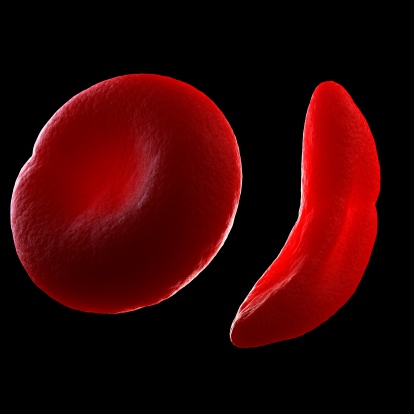
2023 Sickle Cell Society partnership awareness campaign sickle cell omniverse
SHANGHAI, CHINA https://nvidianews.nvidia.com/news/gpu-acceleration-of-top-genomics-application-with-openacc-promises-to-help-speed-delivery-of-life-saving-drugs#:~:text=SHANGHAI%2C%20CHINA%20%2D%2D%20NVIDIA%20today,the%20disease%20treatment%20research%20process. -- NVIDIA today announced that the OpenACC programming standard has enabled Chinese researchers to dramatically accelerate the DNADist genomics application,1 which is used in the early stages of development of treatments for genetic conditions, such as Down syndrome, hemophilia, cystic fibrosis, and sickle-cell disease.
Using the CAPS enterprise OpenACC compiler, Shanghai Jia Tong University researchers accelerated the DNADist application by 16 times on an NVIDIA® Tesla® GPU-based system by adding just four simple hints -- known as "directives" -- to the application code.
DNADist, a distance-matrix application for studying the genetic relationships between various species over evolutionary history, enables researchers to extract information from sequenced DNA data by reading nucleotide sequences, which may potentially lead to a greater understanding of the causes of and treatments for pervasive genetic diseases. Accelerating the DNADist application allows researchers to study a significantly larger range of input data and obtain actionable information earlier in the disease treatment research process.
A programming standard for parallel computing using directives, OpenACC is designed to enable millions of researchers around the world to easily take advantage of the transformative power of GPU computing. It provides the easiest way for users, with or without extensive parallel programming expertise, to accelerate their research in a matter of hours using familiar programming models.
Roche Impressed with OpenACC, Power of GPU Acceleration
By quickly delivering game-changing application acceleration with minimal effort, OpenACC provides world-leading pharmaceutical companies like Roche with the ability to research, identify and develop more effective drugs faster and more cost-effectively.
"I am astonished at how quickly and easily OpenACC unlocked the power of GPU acceleration for DNADist, which is one of our most critical applications," said Steve Pan, project director, Roche Pharma Global Informatics. "The potential impact of GPUs is priceless because getting our products to market faster, even one day earlier, will save more lives."
"Extracting meaningful information from the vast collection of available DNA sequencing data requires ever-increasing amounts of computational power," said Sumit Gupta, senior director of the Tesla business at NVIDIA. "OpenACC enables researchers to quickly and easily leverage the enormous performance of GPU accelerators to analyze mountains of genomics data. This dramatically reduces the time to study biological systems, and potentially leads to the development of more effective next-generation medicines."
A large and growing number of researchers and engineers are using OpenACC-supported compilers and hybrid CPU/GPU computing systems to accelerate all types of applications, including CAD/CAM, image processing, materials science, molecular dynamics, quantum chemistry, and many other applications. In many cases, users are reporting that they have achieved as much as 5-10X or faster levels of acceleration in as little as a few hours of work.
Webinar to Showcase OpenACC, DNADist - Sept. 6, 2012
CAPS enterprise will deliver a free public webinar on Thursday, Sept. 6, 2012, to educate participants about OpenACC use cases and best practices, and provide more detail on the acceleration of the DNADist application. To learn more or to register, visit https://www2.gotomeeting.com/register/668751466.
About NVIDIA Tesla GPUs
NVIDIA Tesla GPUs are massively parallel accelerators based on the NVIDIA CUDA® parallel computing platform and programming model. Tesla GPUs are designed from the ground up for power-efficient, high performance computing, computational science and supercomputing, delivering dramatically higher application acceleration for a range of scientific and commercial applications than a CPU-only approach.
More information about NVIDIA Tesla GPUs is available at the Tesla website. To learn more about CUDA or download the latest version, visit the CUDA website. More NVIDIA news, company and product information, videos, images and other information is available at the NVIDIA newsroom. You can also follow us on Twitter (@NVIDIATesla).
About NVIDIA
NVIDIA (
1) DNADist is part of the Phylip (PHYLogeny Inference Package) open source package of programs used by academicians in the field of biosciences, primarily in phylogeny. Source: http://en.wikipedia.org/wiki/PHYLIP
Subscribe to:
Posts (Atom)