Is it possible for engineers and humans to advance intelligence 1) to progress safe affordable homes for families 2) better nutrition for all; 3) better health for all; 4) smarter livelihood education; 5) cultural reust for women as much as men 6) better access of water for all; 7 more efficient and sustainable energy for all; 8 better opportunities for youth to generart? Of course it is but as we look around the world can we help humans everywhere that these intelligent systems are not yet being scaled.?. .
AIworld: Can we data map & celebrate places where education wants youth and tech to design healthy, wealthy and joyful jobs : Taiwan, West Coast USA, India, UK, Singapore/HK, UAE, Korea, Japan, Nordica, Canada France Germany
Probable First 10 priorities of 25X energy efficient supercomputers
India Billion peoples basic ai health system & universal finance id
Agentic AI transformation womens education 9 to 15
Startup open ai ecosystem bridging hundreds of first mile agri and arts/garments etc startups with nations top 10 industries (Elon)
UK-Valley Alphafold biotech segment leaps include tropical diseases as well as worldwide cancer data
Translation of all mother tongues to everyone codes ai via top 2 language llms and decolonial ai geonomic maps
Doudna Deepest continent scaled maths problems starting with energy and health transmission
First follower humanoid digital twins- eg community safety jobs nobody wants
Open profession AI startups
Colossus space ai including drone & cable ai
Chat+inference+physical ai everywhere self driving cars' "road of things AI"
Taiwan AI Digital twin ai factories etc- from Asia to West
Earth 2.0 & all deep global data others dont want to first
HUmanoids on streets ai
Japan AI 5 asian supercity benchmark 5 or more western capitals including green model for half of countries with next to no critical minerals
Transgeneration Mapping (beyond multilateral relocation of education for millennial generation- eg united mayors ai)
HK and diaspora chinese: Digital twin university health colleges
Neuroscience etc Mapping start up ecosystem bridging cultures of 10 + regional nations and superport value chains
nft and womens metagames ai - eg beingai.org
UAE Water ai and Parallel geo-ai system but for middle east primarily desert superports and 360 degree trade maps sustainability
France - nuclear datacentre ai micro open ai and top 10 eu continent industries>
Sports AI owned by youth- end bad media and bring eg swiss into open euro models
Open history- culture ai
25 years of knowledge city ai uniting nordia elearning & human capital- livelihoods new to millennils
PLus one
Help welcomed ongoing intelligence Case Search - source Nvidia top 100 partners in 21st C accelerated computing - alphabet olf engineering inteligence - AI, BioI, Trillion$CoroprateI, DiscoveryI, EnergyI, FinananceI, GovI, HealthI, Icubed : 1) your real 1; 2 your digital 1; 3 your brain body and communal wellbeing support from agentic ai
.In Q3 of 1800s, Santa Clara was fav space in new world of st francis female networks : Clares missionaries devoted to community building round health of infants and moms. The valley below was a paradise of fruits and vegs. Look North and you might see the continent's tallest tree "Alto" & Mountain View. The Clare's mission was the largest outside Italy and Vatican. Then the president of California's only teen died of a water born disease from their holiday in Rome. They turned the family farm into a university valuing every Californian child - Junior's Stanford -where else might humans and machine intel unite the world . Dare we gamify intelligence for 8 billion beings to see the woods & the tree, the mountains and the oceans ... AIGames.solar
Let's borrow HG Well's Time Machine & his bon mots - civilisation is a race between edu & catastrophe
9) in the 2020s the valley and the clares inspire moments of lift by the west's two most influential female philanthropists Ms MG and Ms PC. Can hi-trust celebrations of women empowerment be envisioned by 21st C deep learning Mathematicians 5) FFL (friends Gates, Chan, Stanford HAI) & DH (friends google brain, deepmind, alphafold2) and unite what was rooted in 1) Valley 2001 when two of the 20th's century's most extraordinary personal networkers SJ & FA brainstormed to most deeply see new millennium human intelligences (romr has it from this party on both these men spent the rest of their lives chatting up the viewpoint that new womens universities would be the key to celebrating every millennials goal)
Story Details (video confirmations to come)
So it was fortunate that in 2001, the word's most exciting designer of personal mobilisation brain tools hosted 65th birthday party for the late 20th century's number 1 women empowerment servant leader Fazle Abed. Just like americans love that their compatriot borlaug gave humanity's goal 2 end hunger a lift and saved a billion people from starvation with his last mile agriculture curriculum in mid 20th c which had deepest local adaptations to rice (one which most of the east's population fees), Fazle Abed's 4th quarter of 20th c had shared borlaug magic and with unicef james grant oral rehydration magic and innoculations magic with the new economics of community networked smallest enterprises. Their brainstorming session came up with an extraordinary conclusion. To be sustainable all millennials female and male needed to linkin withy a university of as yet missing curricula- when we say a university we mean a curricula of all ages - eg how does tech first attach 5 year old minds with AI dance or AI drawing; how does AI change systems celebrating maths teachers minds with the missing curricula that the UN has declared 23-24 schools year of global futures and which BARD 1001 Language mediator discusses
Friday, September 1, 2023
would I be correct that some major gifters are motivated by connecting with advancing good with the next generation (as well as mindset of King's English where that may be different from American English)
Right now Cambridge-London are advancing Western Intelligence second only to Stanford Region because of Arm and Hassabis AI uniquely matches natural science AI ( biotech, climate science , deep diversity of agri & culture and earlier mental/physical health services through Gatsby the Royal Society of Neuroscience)
King Charles AI world Series unites English mindsets with Commonwealth including land/agricultural development of small nations - a focus of Russ's Moreover while US megachips are primarily connected with Taiwan, Arm (still majority owned by Japan's Softbank and also connected through Stanford Trustee Chair's Jerry Yang's Japanese wide to arts/cultures) is more connected with the 4 far east nations Charles and Elizabeth most impacted - Japan Korea Hong Kong, Singapore . Charles was UK delegate to Tokyo Olympics 1964, He met Akio Morita Sony and established Japan's first inward investment in Europe; he friended the Emperor family on green agendas and tennis.
Because of American politics: the Kings English is now the best bet for translating good and cultural reconciliation. Although MIT has led world in open learning curricula and with berners lee, it and indeed other East Coast alumni networks (Cuny and NYU is favorite of mine - having built black girls and India sdg relationships since UN 2015 goals).
There is also the professional issue British Law still connects with EG Royal intergenerational development concern that American doesnt. Moreover much land and climate AI is in danger of eg Insurance companies playing out big client interests not the transparent cooperation millennials now need.
Are there any branches of Cambridge in America that might want to check out above -all to play for in these next few months and perhaps even help some parts of USA see good AI is not what Trump will help youth entrepreneur
Fei Fei Li at HAI at C-span at AI4all , at setr with condy rice
Actually 100 Fei-Fei Li began her 4rh 15 yera attempt to help humanity chnage itself with publication of worlds i see and co-launch with 101 Condy Rice of POlicy briefings on the fusion of 10 enegineering profs cgahnging worlds li's AI; chips at stanfird since 2004 oby yahoo [prof Horowitz ...she' also chatted to 103 Bill Daly now at nvidia but who warmly greted her when her 3rd pahase began at stanford with the likes of Daphne Kolley Andrew Ng, Hassabis on tour from London, the background support of Mr and Mrs Yang now in their 6th year of reinvesting yahoo wealth in stanford all the while aligned to Mrs Steve Jobns commitment to husband since they staged 1 billion girls empowerments debriefing in 2001 aka fazle abed's 65th birthday wish party in valley
before stanford Li's 2nd 15 years had landed in new jersey not speaking english, been mentired by maths teacher at parsipany high, woon a physics scolarship to princeton whilst supporting her family's finances with a dry cleaner franchise - doing the most impoosible us doctorate in parallel to hassabis doing the Uk's most impossible uk doctrate- psycho professors in both american and english hated the idea that a computer brain might exceed their iwn brain theory's; preping to launch the largest databank ever seen 20 million images as an annual global comptition, nit bad for a girl whose first 15 years developed our of Beijining and Chonk - fortunately realy great maths brans need the absoute confidence and curosity of their parents home schooling - that was what mr & mrs Li gave Their supergirl (fei-fei means something like fly like a ricket wherever yout imagination takes you)
Tuesday, May 30, 2023
hi an asian friend asked bard for 5 intro ppt slides on AI - this is what bard gave us- local bonus dc - in tghis 11th year of youth summits at world bank, do you know any youth summiteers or world bankers who might want to improve on Bard's start on HumansAI? http://povertymuseums.blogspot.com
Slide 1: The History of AI
Artificial intelligence (AI) is a branch of computer science that deals with the creation of intelligent agents, which are systems that can reason, learn, and act autonomously.
AI research has been highly successful in developing effective techniques for solving a wide range of problems, including game playing, natural language processing, and image recognition.
AI is still a young field, and there is much that we do not know about how to create truly intelligent agents. However, the progress that has been made in recent years is truly remarkable, and AI is poised to have a major impact on our lives in the years to come.
Slide 2: The Early Days of AI
The history of AI can be traced back to the early days of computing, when Alan Turing, John McCarthy, and other pioneers began to explore the possibility of creating machines that could think.
In the 1950s and 1960s, there was a flurry of activity in AI research, and a number of early successes were achieved. However, the field also experienced a number of setbacks, and by the 1970s, AI research was in a state of decline.
Slide 3: The Rise of Deep Learning
In the 1980s, AI research began to make a comeback, thanks in part to the development of new techniques for machine learning, such as neural networks.
In the 1990s, AI research continued to grow, and a number of new applications were developed, such as spam filtering and fraud detection.
In the 2000s, AI research experienced a major breakthrough with the development of deep learning, which is a type of machine learning that uses artificial neural networks to learn from data.
Deep learning has led to a number of new AI successes, such as the development of self-driving cars and the ability to defeat human champions at games like Go.
Slide 4: The Future of AI
The future of AI is bright. Deep learning is still a young field, and there is much that we do not know about how to use it to create truly intelligent agents. However, the progress that has been made in recent years is truly remarkable, and AI is poised to have a major impact on our lives in the years to come.
Some of the potential applications of AI in the future include:
Self-driving cars
Virtual assistants
Medical diagnosis
Financial trading
Education
Manufacturing
Security
Slide 5: Conclusion
AI is a powerful technology with the potential to change our lives in many ways. It is important to use AI responsibly and ethically, and to ensure that it is used for good and not for evil.
We are still in the early days of AI, but the progress that has been made in recent years is truly remarkable. AI is poised to have a major impact on our lives in the years to come, and it is important to be prepared for this change.
=====================
personally my family's records from dad's Economsit seconded year in princeton 1951 trace Architecture of Intel (AI) to NET - Neumann-Einstein-Turing - this takes us back through start of multilaterals 1945 and to ITU which was genesis of swiss league of nations and global coms since 1865~there are also strange trfcks Gandhi first became old world famous celebrity as telegraphs picked up his journalism in india and warned both london and south africa Durban) of the coming of a decolonial AI Barrister
..
Zooming this summer before college year 23-24 and UNGA year Global Futures forum - Which future learning curves might you like to tour from PovertyMuseums blog & EconomistDiary.com
PM Datelines eg
PM 2023 co-share EconomistArts.com Valuing how co-creatively education spend millenaisl time and space update with bard on brad
1951 First Merger of Economist and AI Architects of Intelligence
1964 we are all alumnisat.com now - how kc3.dev celebrated liftoff extending Castal Belt if japan neighbors as AI's 5h dimension
1972 Bangladesh and 1 billion girls join in pacific valuation of civilsation is race between ed and catastrophe - design halthy societies to generate growath economies not vive versa- Starting linbe of Versions of Entrepreneurial Revolution 1 2 3
1984's 2025 report Timelines of SDG generation to 2025 now with 5 yeras overtime Un2.0 since 2015
2001 Steve Jobs family joins 1 billion girls in calling for 21st C university coopetration revolution
2008 PM subprime crossroads - didnt quite make out future for good in midst of banking colapse but good try GB and MY
Futyre Histiry Recursion footbote 1 KNow ye Know ye The ITU 1945-1865 was at the root of 2 worl dwars ,- what if the roots of peace 2030-1945 are linked to ITU(N)AIC - mulltilaterals freedom to value 2220s design mediating digiotal cooperation and Architect of Intelligene grounded by deep data : SHELFF*WEE*PIC -can your selfies celebrate nature's Peace Infrastructure and Climate maps. DO you value WEE water education emplyment the way Scots since Adam Smith do next. What if She=too Health Education Leadership Food Finance to end poverty connected every networking frined you most influece.
UK unveils world leading approach to innovation in first artificial intelligence white paper to turbocharge growth
Government launches AI white paper to guide the use of artificial intelligence in the UK, to drive responsible innovation and maintain public trust in this revolutionary technology.
White paper sets out new approach to regulating artificial intelligence to build public trust in cutting-edge technologies and make it easier for businesses to innovate, grow and create jobs
plan will help unleash the benefits of AI, one of the 5 technologies of tomorrow, which already contributes £3.7 billion to the UK economy
follows new expert taskforce to build the UK’s capabilities in foundation models, including large language models like ChatGPT, and £2 million for sandbox trial to help businesses test AI rules before getting to market
Five principles, including safety, transparency and fairness, will guide the use of artificial intelligence in the UK, as part of a new national blueprint for our world class regulators to drive responsible innovation and maintain public trust in this revolutionary technology.
The UK’s AI industry is thriving, employing over 50,000 people and contributing £3.7 billion to the economy last year. Britain is home to twice as many companies providing AI products and services as any other European country and hundreds more are created each year.
AI is already delivering real social and economic benefits for people, from helping doctors to identify diseases faster to helping British farmers use their land more efficiently and sustainably. Adopting artificial intelligence in more sectors could improve productivity and unlock growth, which is why the government is committed to unleashing AI’s potential across the economy.
As AI continues developing rapidly, questions have been raised about the future risks it could pose to people’s privacy, their human rights or their safety. There are concerns about the fairness of using AI tools to make decisions which impact people’s lives, such as assessing the worthiness of loan or mortgage applications.
Alongside hundreds of millions of pounds of government investment announced at Budget, the proposals in the AI regulation white paper will help create the right environment for artificial intelligence to flourish safely in the UK.
Currently, organisations can be held back from using AI to its full potential because a patchwork of legal regimes causes confusion and financial and administrative burdens for businesses trying to comply with rules.
The government will avoid heavy-handed legislation which could stifle innovation and take an adaptable approach to regulating AI. Instead of giving responsibility for AI governance to a new single regulator, the government will empower existing regulators - such as the Health and Safety Executive, Equality and Human Rights Commission and Competition and Markets Authority - to come up with tailored, context-specific approaches that suit the way AI is actually being used in their sectors.
The white paper outlines 5 clear principles that these regulators should consider to best facilitate the safe and innovative use of AI in the industries they monitor. The principles are:
safety, security and robustness: applications of AI should function in a secure, safe and robust way where risks are carefully managed
transparency and explainability: organisations developing and deploying AI should be able to communicate when and how it is used and explain a system’s decision-making process in an appropriate level of detail that matches the risks posed by the use of AI
fairness: AI should be used in a way which complies with the UK’s existing laws, for example the Equality Act 2010 or UK GDPR, and must not discriminate against individuals or create unfair commercial outcomes
accountability and governance: measures are needed to ensure there is appropriate oversight of the way AI is being used and clear accountability for the outcomes
contestability and redress: people need to have clear routes to dispute harmful outcomes or decisions generated by AI
This approach will mean the UK’s rules can adapt as this fast-moving technology develops, ensuring protections for the public without holding businesses back from using AI technology to deliver stronger economic growth, better jobs, and bold new discoveries that radically improve people’s lives.
Over the next 12 months, regulators will issue practical guidance to organisations, as well as other tools and resources like risk assessment templates, to set out how to implement these principles in their sectors. When parliamentary time allows, legislation could be introduced to ensure regulators consider the principles consistently.
Science, Innovation and Technology Secretary Michelle Donelan said
AI has the potential to make Britain a smarter, healthier and happier place to live and work. Artificial intelligence is no longer the stuff of science fiction, and the pace of AI development is staggering, so we need to have rules to make sure it is developed safely.
Our new approach is based on strong principles so that people can trust businesses to unleash this technology of tomorrow.
Businesses warmly welcomed initial proposals for this proportionate approach during a consultation last year and highlighted the need for more coordination between regulators to ensure the new framework is implemented effectively across the economy. As part of the white paper published today, the government is consulting on new processes to improve coordination between regulators as well as monitor and evaluate the AI framework, making changes to improve the efficacy of the approach if needed.
£2 million will fund a new sandbox, a trial environment where businesses can test how regulation could be applied to AI products and services, to support innovators bringing new ideas to market without being blocked by rulebook barriers.
Organisations and individuals working with AI can share their views on the white paper as part of a new consultation launching today which will inform how the framework is developed in the months ahead.
Lila Ibrahim, Chief Operating Officer and UK AI Council Member, DeepMind, said:
AI has the potential to advance science and benefit humanity in numerous ways, from combating climate change to better understanding and treating diseases. This transformative technology can only reach its full potential if it is trusted, which requires public and private partnership in the spirit of pioneering responsibly. The UK’s proposed context-driven approach will help regulation keep pace with the development of AI, support innovation and mitigate future risks.
Both our business and our customers will benefit from agile, context-driven AI regulation. It will enable us to continue to lead the technical and quality assurance innovations for safety-critical industrial AI applications, while remaining compliant with the standards of integrity, responsibility and trust that society demands from AI developers.
Sue Daley, Director for Tech and Innovation at techUK, said:
techUK welcomes the much-anticipated publication of the UK’s AI white paper and supports its plans for a context-specific, principle-based approach to governing AI that promotes innovation. The government must now prioritise building the necessary regulatory capacity, expertise, and coordination. techUK stands ready to work alongside government and regulators to ensure that the benefits of this powerful technology are felt across both society and the economy.
Clare Barclay, CEO, Microsoft UK, said:
AI is the technology that will define the coming decades with the potential to supercharge economies, create new industries and amplify human ingenuity. If the UK is to succeed and lead in the age of intelligence, then it is critical to create an environment that fosters innovation, whilst ensuring an ethical and responsible approach. We welcome the UK’s commitment to being at the forefront of progress.
Rashik Parmar MBE, chief executive, BCS The Chartered Institute for IT, said:
AI is transforming how we learn, work, manage our health, discover our next binge-watch and even find love. The government’s commitment to helping UK companies become global leaders in AI, while developing within responsible principles, strikes the right regulatory balance. As we watch AI growing up, we welcome the fact that our regulation will be cross-sectoral and more flexible than that proposed in the EU, while seeking to lead on aligning approaches between international partners. It is right that the risk of use is regulated, not the AI technology itself. It’s also positive that the paper aims to create a central function to help monitor developments and identify risks. Similarly, the proposed multi-regulator sandbox [a safe testing environment] will help break down barriers and remove obstacles. We need to remember this future will be delivered by AI professionals - people - who believe in shared ethical values. Managing the risk of AI and building public trust is most effective when the people creating it work in an accountable and professional culture, rooted in world-leading standards and qualifications.
ED: we'll' be adding adam smith scholars moral sentiments update 265 later this year which would also have been centenary of my father normanmacrae.net and 73rd year of the survey he and von neumann started (hosted in the economist to 1989 and other 2025 report platforms since): what goods will peoples unite where they have first access to 100+ times more tech per decade ?
====================plus
Follow
Lila Ibrahim
@lilaibrahim
Google DeepMind COO, former Coursera-KPCB-Intel, founder Team4Tech, Purdue engineer, women in tech, Crown Fellow, WEF YGL
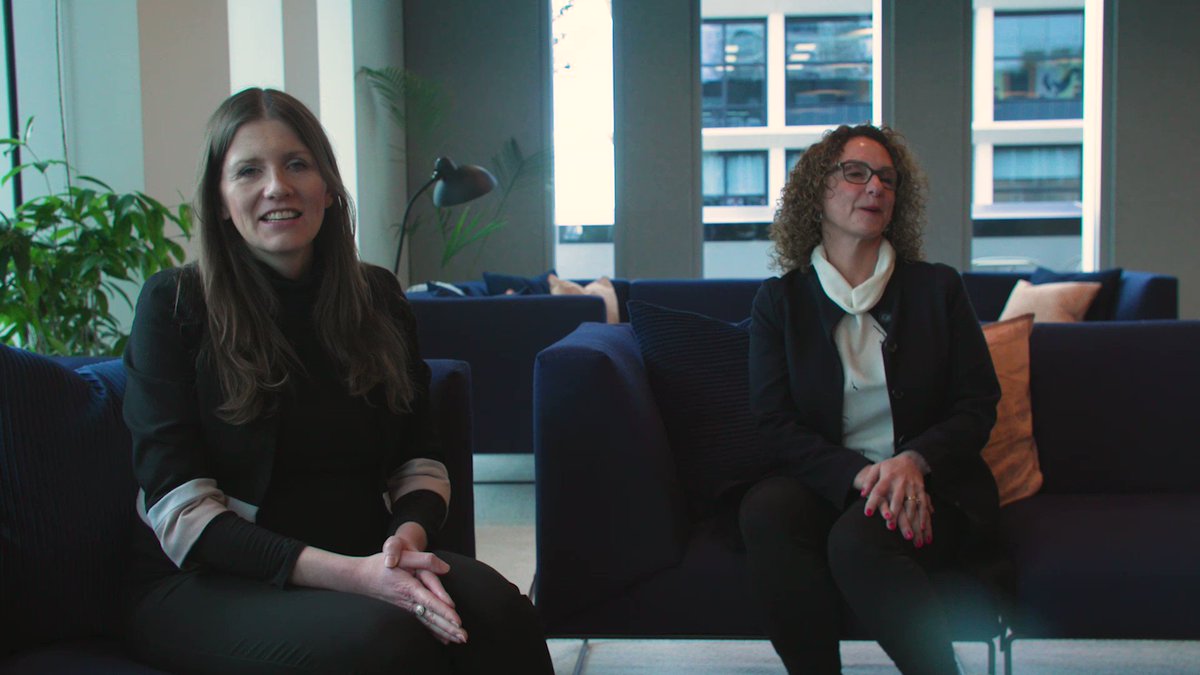
Today we've set out a world leading approach to regulating AI. It will:
help businesses innovate, grow & create jobs
keep people safe & build public trust
I sat down with
The phenomenal teams from Google Research’s Brain and @DeepMind have made many of the seminal research advances that underpin modern AI, from Deep RL to Transformers. Now we’re joining forces as a single unit, Google DeepMind, which I’m thrilled to lead!
Research join forces as Google DeepMind. #AI will help communities to achieve amazing breakthroughs - bringing these teams together gives us the best talent&resources to help address the biggest challenges facing humanity
Quote
Google DeepMind
@GoogleDeepMind
·
We’re proud to announce that DeepMind and the Brain team from @Google Research will become a new unit: 𝗚𝗼𝗼𝗴𝗹𝗲 𝗗𝗲𝗲𝗽𝗠𝗶𝗻𝗱.
Together, we'll accelerate progress towards a world where AI can help solve the biggest challenges facing humanity. → https://dpmd.ai/google-deepmind
dives into the benefits, risks, and questions associated with AI and how businesses can prevent it from creating biases.
Watch now: https://sforce.co/3Fvhz4N
with #AlphaTensor, which discovers more efficient ways to tackle a mathematical task that’s ubiquitous to modern computing.
We hope this work helps address a fundamental computer science problem & advances a new era of algorithmic discovery.
Quote
Google DeepMind
@GoogleDeepMind
·
Today in @Nature: #AlphaTensor, an AI system for discovering novel, efficient, and exact algorithms for matrix multiplication - a building block of modern computations. AlphaTensor finds faster algorithms for many matrix sizes: https://dpmd.ai/dm-alpha-tensor & https://dpmd.ai/nature-alpha-tensor… 1/